AIPOCH Open-Science v1.2.2 adds stricter Notebook network rules, resumable research films, improved PDF handling, safer Windows folder grants, and provider updates.
AIPOCH Open-Science is AIPOCH's local-first research workbench. The public v1.2.2 GitHub page currently shows a tag and title, while the AIPOCH homepage supplies the update summary used here.
What new capabilities help researchers in v1.2.2?
AIPOCH Open-Science v1.2.2 gives researchers more control over Notebook network access, makes interrupted Research Film generation easier to resume, and improves the handling of external and translated PDFs, addressing three practical research needs: limiting service access during execution, continuing presentation work after an interruption, and inspecting documents without losing important structural context.
In its 2026 version update, AIPOCH describes an opt-in Strict whitelist for Notebook networking. The update also says Research Film generation resumes from validated checkpoints and describes changes to PDF handling.
Strict Notebook Networking
When a Notebook needs limited network access, v1.2.2 offers an opt-in Strict whitelist. A request must match the configured protocol, host, and port; an unmatched request is blocked without an authorization prompt. Researchers can set narrower rules for the services a workflow needs. The setting is opt-in, so confirm the active mode before relying on its behavior. See AIPOCH's version update.
Resumable Research Films
An interruption no longer requires the Research Film workflow to restart from the beginning. Version 1.2.2 resumes from validated checkpoints, shows five progress steps, and reuses completed scenes and narration, according to AIPOCH's update. Researchers should still review the film before sharing it: the product guidance explains that a film presents recorded work without validating scientific conclusions.
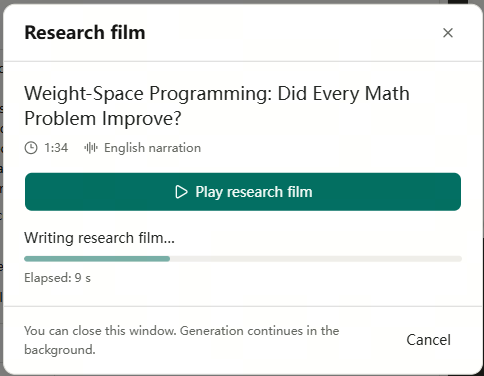
The Research Film generation dialog shows the progress window; this image does not show checkpoint recovery.
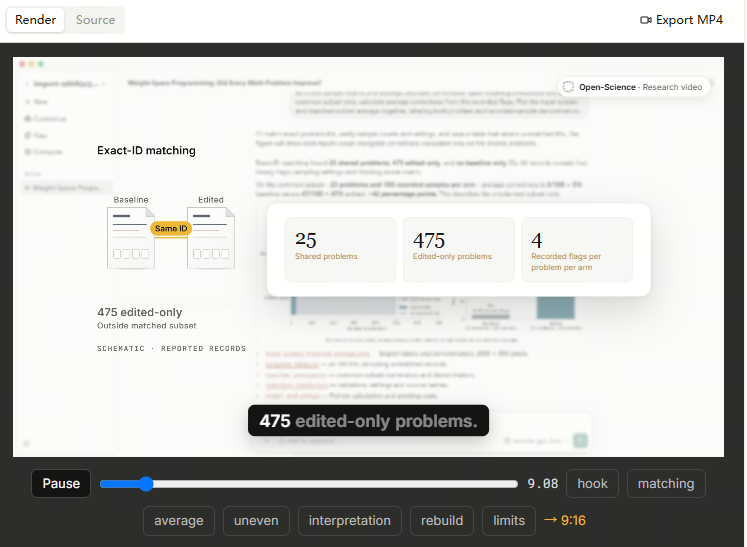
A Research Film preview of a public AIPOCH case; the playback image illustrates the film format rather than the v1.2.2 resume behavior.
More Faithful PDFs
External PDFs can be difficult to inspect when figures, tables, captions, or reading order are lost. AIPOCH says v1.2.2 retains those native elements and preserves the original structure and layout in translated documents. Researchers should compare important extracted or translated passages with the source document.
What else is new in v1.2.2?
AIPOCH Open-Science v1.2.2 also updates provider choices and protected-mode folder access, giving researchers additional configuration options and an earlier check before a Windows folder grant is saved, while leaving actual model availability dependent on the connected account, selected backend, supported protocol, region, and installed version shown in the application.
The 2026 version update names Qwen4 Max Preview for Bailian Token Plans in Beijing and Singapore. The Open-Science product page explains that model availability depends on the account, backend, protocol, region, and installed version.
- Provider choices: Qwen4 Max Preview joins the named Bailian Token Plans, and defaults for official connections are refreshed. Check the model list shown by the installed app.
- Windows folder grants: Protected mode checks a folder grant before saving it. AIPOCH describes the change in its version update.
Which bug fixes affect daily use?
AIPOCH Open-Science v1.2.2 addresses Windows and document workflow failures described in AIPOCH's public update summary, including recovery around update, uninstall, and handoff operations, plus preservation of PDF structure, but the accessible summary does not provide a complete itemized bug-fix list and therefore supports only the bounded descriptions given below.
The 2026 AIPOCH update describes more reliable Windows update, uninstall, and handoff recovery with diagnostics preserved. It also describes retention of native figures, tables, captions, and reading order in external PDFs.
- Windows recovery: Update, uninstall, and handoff flows have improved recovery, with diagnostics preserved.
- Document structure: External PDFs retain the listed native elements, and translated documents preserve source structure and layout.
How can readers install or update AIPOCH Open-Science?
Researchers should check the official download page and versioned GitHub page before attempting to install the AIPOCH Open-Science 1.2.2 update, because the public download page still labels version 1.2.1 as stable and the accessible 1.2.2 tag page does not expose a verified desktop asset list, leaving version-specific installation instructions unconfirmed.
At drafting, the AIPOCH download page listed v1.2.1 as the stable installer in 2026. The v1.2.2 GitHub page showed the version tag but no readable detailed release body.
Use the official download page for the currently published stable installer. Check the v1.2.2 GitHub page again before using any v1.2.2 package.
Where can readers verify the release and learn more?
Readers can verify the public AIPOCH Open-Science v1.2.2 update summary on AIPOCH's homepage and the version tag on GitHub, then use the product and documentation pages for broader workflow context, while treating the linked articles about earlier releases and Research Films as background rather than evidence for additional version 1.2.2 features.
The AIPOCH homepage lists five areas in its 2026 v1.2.2 update. The GitHub v1.2.2 page shows the tag and title, but the detailed notes were not readable when this draft was prepared.
- v1.2.2 GitHub page
- AIPOCH Open-Science product page and AIPOCH homepage
- AIPOCH Open-Science documentation
- Open-Science v1.2.1 research workflow updates
- From a .science research package to a film you can share
What questions do readers ask about v1.2.2?
The main questions about AIPOCH Open-Science v1.2.2 concern whether Strict networking is automatic, what Research Film recovery reuses, how external PDFs are handled, and which provider plans change, and the public AIPOCH summary answers those points at a high level while leaving detailed configuration and a complete fix list to future versioned documentation.
In its 2026 update, AIPOCH calls the Strict whitelist opt-in. The update also says completed film scenes and narration are reused after an interruption.
Is Strict Notebook networking enabled automatically? No. AIPOCH describes the v1.2.2 Strict whitelist as opt-in; matching uses protocol, host, and port.
Does a Research Film restart after an interruption? Version 1.2.2 resumes from validated checkpoints and reuses completed scenes and narration. Researchers still need to review the result.
What changes for external PDFs? Version 1.2.2 is described as retaining native figures, tables, captions, and reading order in external PDFs.
Where is Qwen4 Max Preview listed? AIPOCH names Bailian Token Plans in Beijing and Singapore for v1.2.2; availability should be checked in the connected account and installed app.
What limitations and responsibilities apply?
AIPOCH Open-Science v1.2.2 assists researchers with controlled access, document handling, and presentation of recorded work, but the software does not replace scientific judgment or peer review, and researchers remain responsible for checking source documents, network rules, permissions, methods, interpretation, and any Research Film or translated output before relying on or sharing a result.
The Open-Science product page says researchers retain responsibility for methods, data governance, interpretation, validation, and final decisions in 2026. Its Research Film guidance explains that a film presents existing work rather than rerunning analysis or validating conclusions.