Should an astronomy watchlist include a video linked in a sharply worded disagreement? In one Hacker News thread, a commenter objects to a claim about long exposures, then shares a statistics video. The reason for including that video turns on a few words between the objection and the link.
Inspired by Andrej Karpathy’s HackerTube project, this independent AIPOCH Open-Science case examines a small sample of Hacker News comments. Its .science package follows five astronomy videos back to the comments that earned them a place on the watchlist. The study used its own search and selection rules and made no assessment of HackerTube’s catalogue or model. Explore the case.
What did the commenter criticize?
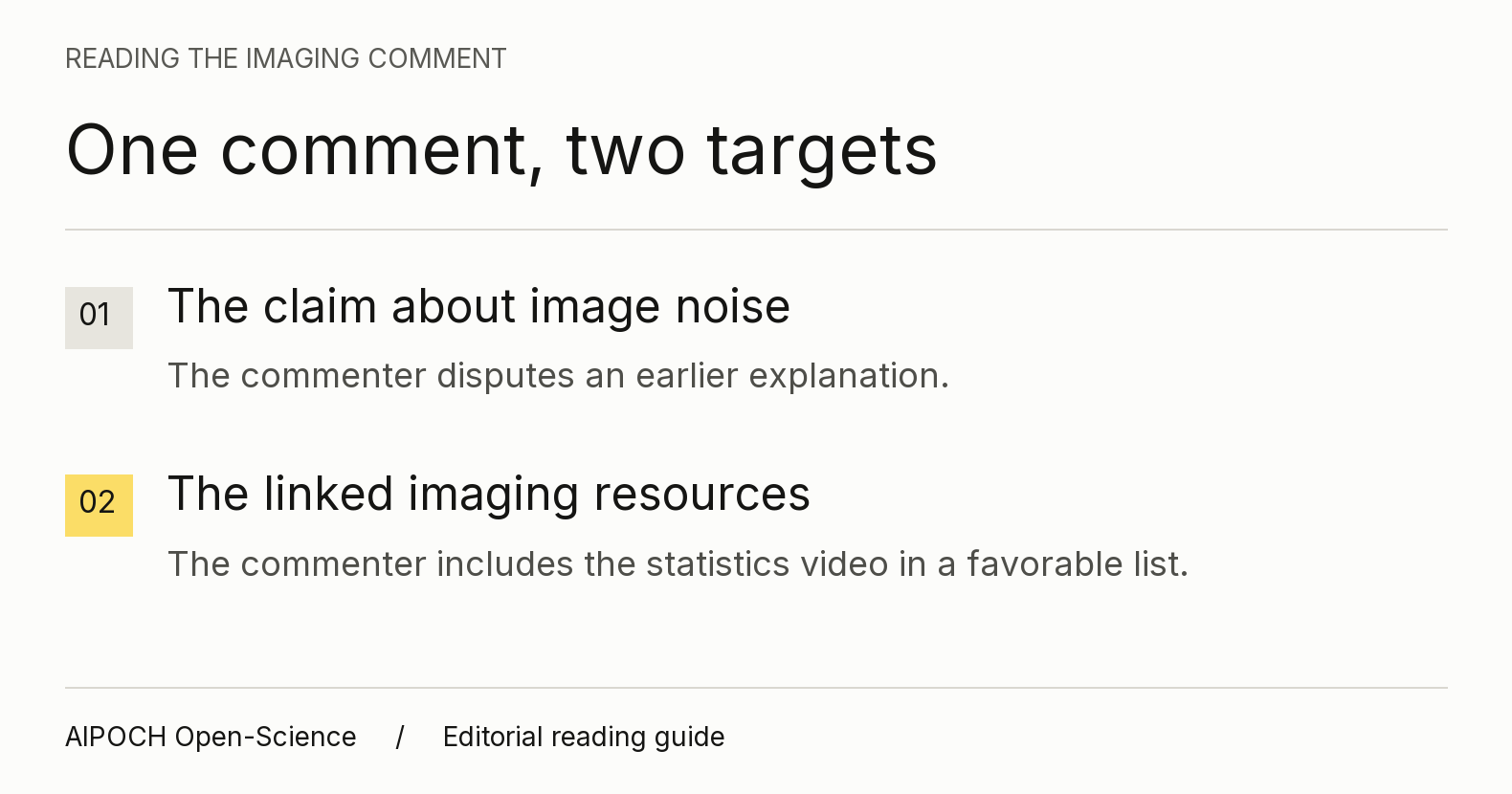
The astronomy reply gives a reader grounds to include a video in a watchlist even though the reply begins with a disagreement, because the objection concerns the effect of exposure time on image noise and the endorsement comes later, when the writer introduces a list of videos. The objection reads “I believe your claim about noise and long exposures is false.” The sentence addresses the preceding claim about exposure time in the original comment (2026). The same reply introduces its list with “To cite a few videos I enjoyed:” and includes the video identified as Basics of Statistics for Astro Imaging in the 2026 case report.
The word claim identifies the target of the objection. The word enjoyed tells us why the links follow. That wording supports a favorable reading of the list as a whole, while leaving open what the commenter thought about any particular argument in the statistics video.
On November 3, 2026, the case took the first 40 relevance-ranked hits for the search astronomy youtube.com and retained comments containing a specific YouTube video ID. That rule yielded 23 comments mentioning 36 unique videos. Two videos appeared in two comments each, giving 38 comment–video pairs to judge. A link shared in two conversations therefore kept both contexts.
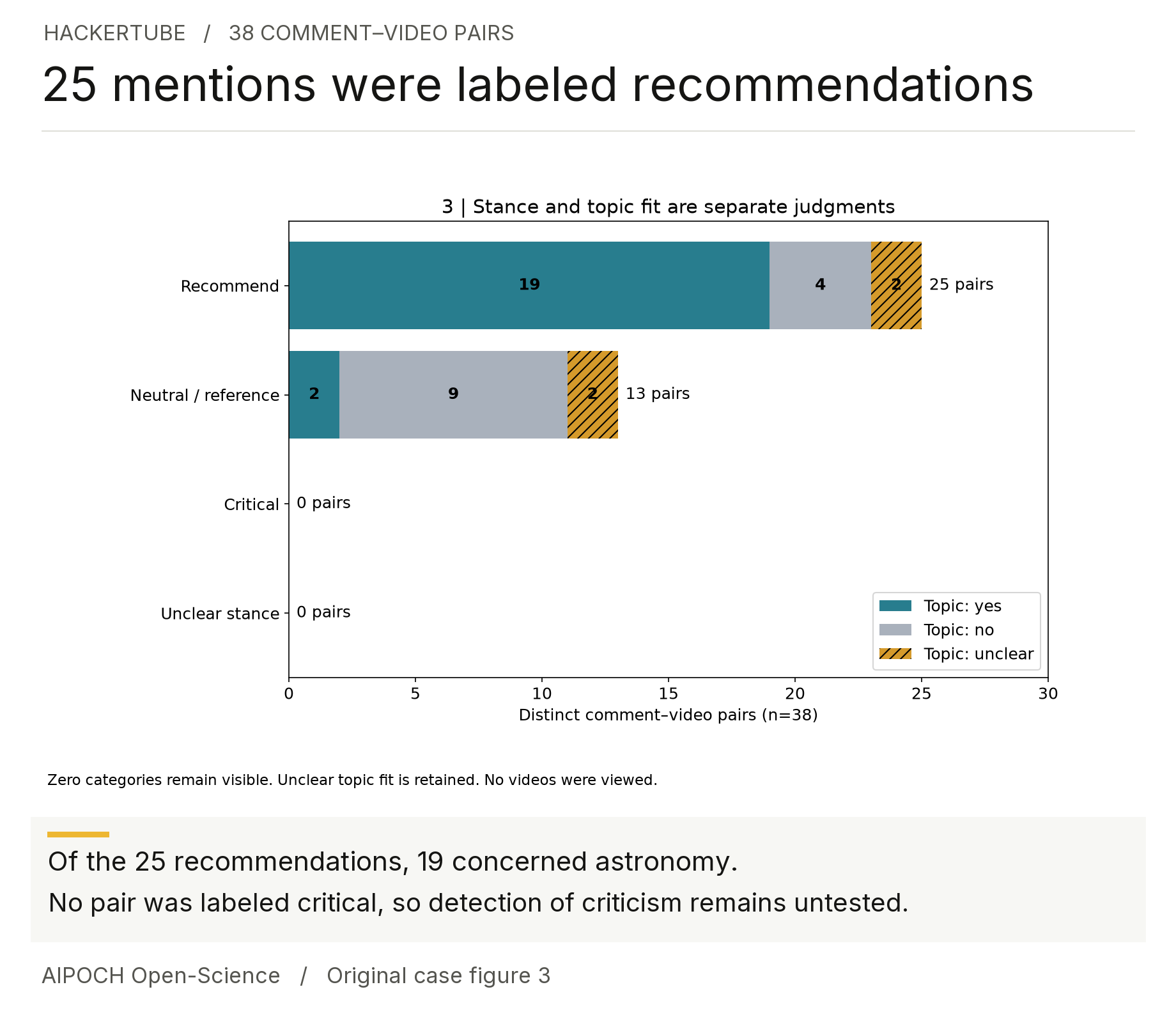
Figure 3. The audit labeled 25 pairs as recommendations and 13 as neutral references. Among the 25 recommendations, it labeled 19 as astronomy-related, four as outside astronomy and two as uncertain. No pair received a critical stance label. Without independent human labels, these counts cannot tell us whether the assistant missed genuine criticism.
How did six mentions support five videos?
A commenter who singles out a video gives a reader a different reason to watch from someone who includes the same video in a list of favorites, and the astronomy watchlist preserves enough of each source to let readers decide what weight to give that difference. The shortlist audit (2026) records three direct recommendations or expressions of praise and three mentions in favorable lists. Two of those list mentions point to the same beginner’s guide by Ed Ting, as the two comment IDs in the final selection table (2026 package) show.
The brief set a limit of five videos. From the 19 pairs labeled both recommended and astronomy-related, the case selected videos for a shortlist spanning beginner observing, astronomy history, satellites, planetary science and imaging. Other eligible videos appear in the omissions table. The order suggests a viewing route. The audit did not include video viewing or playback checks.
Would Ed Ting’s guide qualify under a direct-praise-only rule? Both supporting comments include the guide in favorable resource lists. A stricter rule would remove both reasons for including it. The Starlink entry offers a different kind of evidence: its commenter explicitly recommends the discussion of benefits and drawbacks. The video ID ties the comment to the saved title even though the commenter uses a different title.
What changed in review? The same assistant clarified four of the 38 judgment rows. One edit removed a redundant quotation. The stance labels, topic labels and selections stayed the same.
Trace the imaging video back to its source
Readers can check the imaging video’s place on the watchlist by following its video ID and source comment through three files in the research package, ending with the wording of the reply and as much of the preceding conversation as the case was able to preserve. The case record (2026) preserves the immediate target of the disagreement and flags the incomplete chain of earlier replies. The AIPOCH research package guide (2026) explains how to import the session for read-only inspection and use Fork in the desktop app to continue in a writable copy.
Start with Basics of Statistics for Astro Imaging in final_selection_audited.csv. Use the source comment and video ID together to find the decision in final_judgments.csv. Then open the same comment in hn_comments.jsonl and read the available parent reply. Does the evidence support recommending this particular video, or only recording that it appeared in a list the commenter liked?
The saved rebuild_audit.py reads the frozen judgments and regenerates the counts and figures. Running it can show whether a labeled pair was counted consistently. To decide whether the label fits the comment, open the HackerTube case and follow the imaging video back to its source.