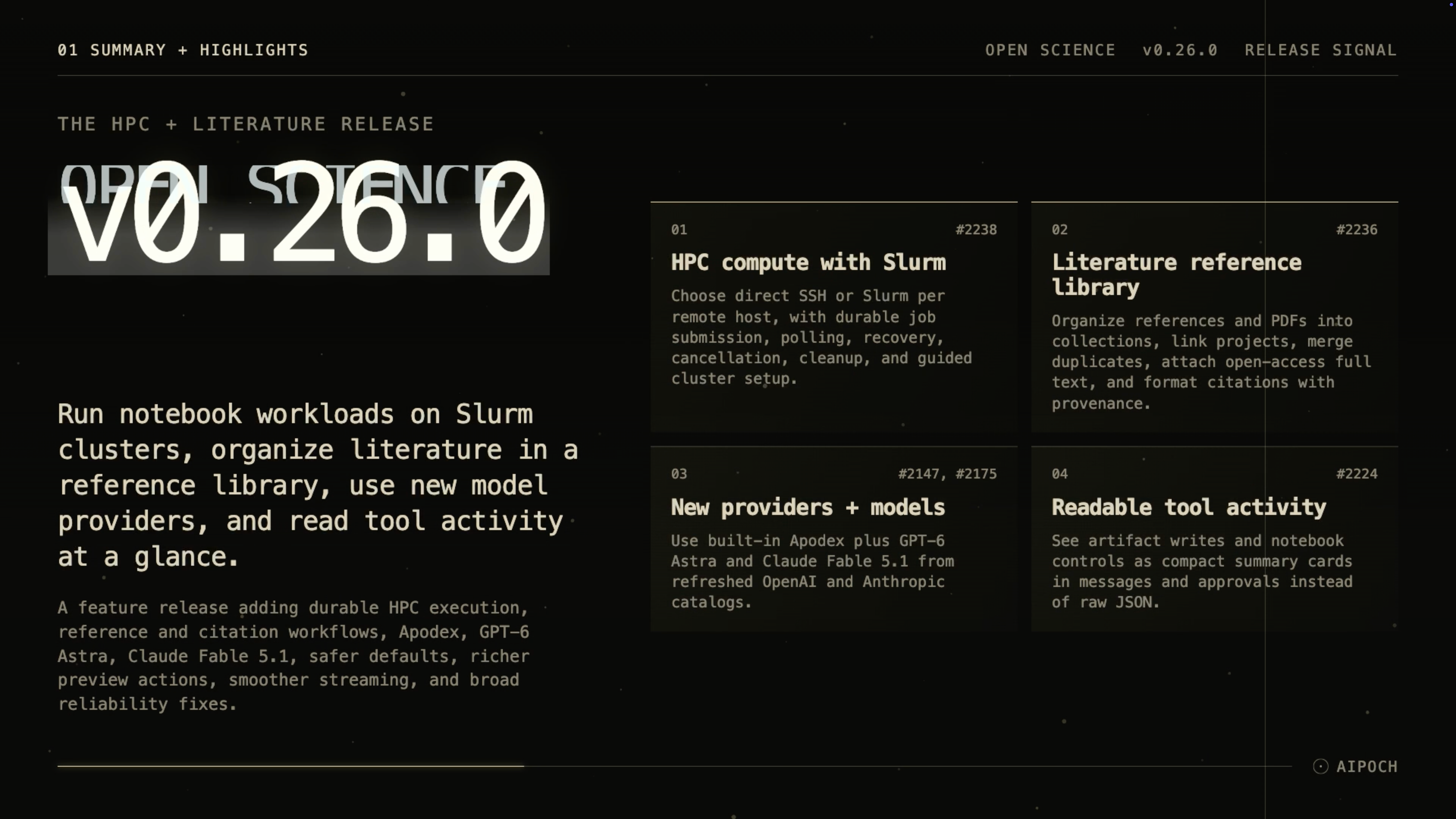
Open-Science v0.26.0 adds Slurm-based HPC execution, a literature reference library, new model choices, and clearer tool activity.
Open-Science is an open-source, local-first, model-agnostic, self-hosted AI research workbench for reproducible scientific discovery. It is developed by AIPOCH.
What new capabilities help researchers scale compute and manage literature?
Open-Science v0.26.0 connects notebook work to Slurm-managed clusters and brings references, PDFs, collections, and citation formatting into the research workspace. The release also expands model choice and makes common tool activity easier to inspect.
Run notebook workloads on HPC clusters with Slurm
Researchers working with shared clusters often need to move from an interactive SSH connection to scheduler-managed jobs. Open-Science now lets each registered remote-compute host use either Direct SSH or Slurm execution mode.
When Slurm is selected, notebook runs can be submitted as scheduler-owned jobs with durable submission, polling, recovery, cancellation, result collection, and remote staging cleanup. The same execution mode is available across the desktop app, web access, and Host SDK.
A Compute Environment Setup Skill provides the exact installation, repair, and removal steps for the selected cluster. Researchers or cluster administrators still control partitions, accounts, modules, queues, permissions, and institutional security policies; Open-Science does not bypass those controls.
Screenshot: actual Open-Science product interface.
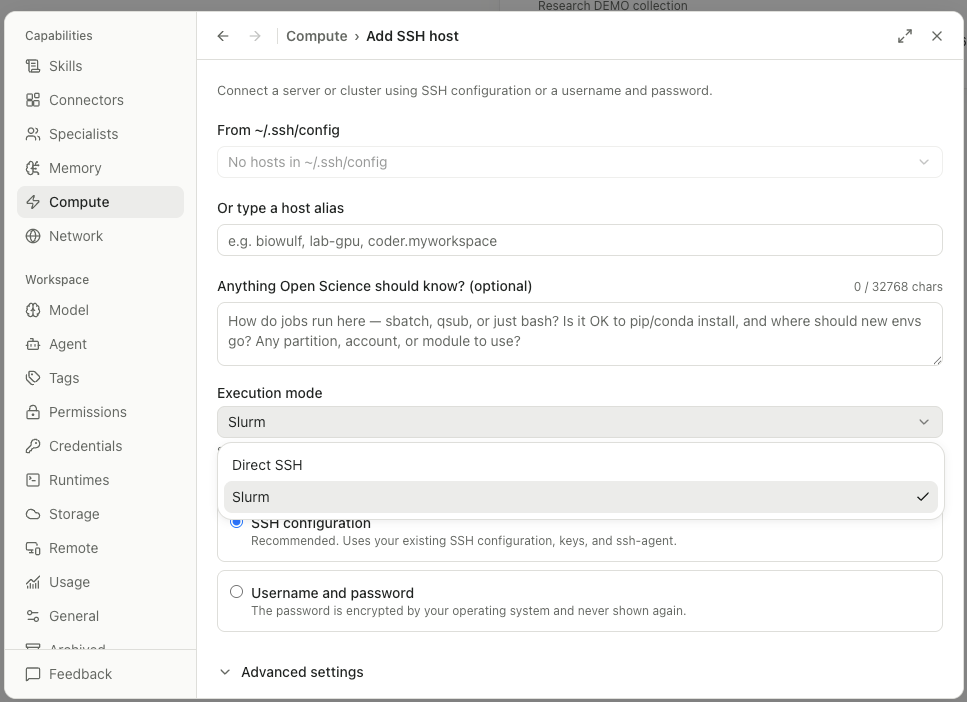
The current remote-compute boundary covers Direct SSH and Slurm. Cloud GPU submission is not included in v0.26.0, and the remote host or cluster must already be available to the researcher.
Organize references, PDFs, and citations in one library
Research literature is often divided among browser downloads, local folders, citation files, and individual research sessions. The new Literature Reference Library gives those materials a shared workspace inside Open-Science.
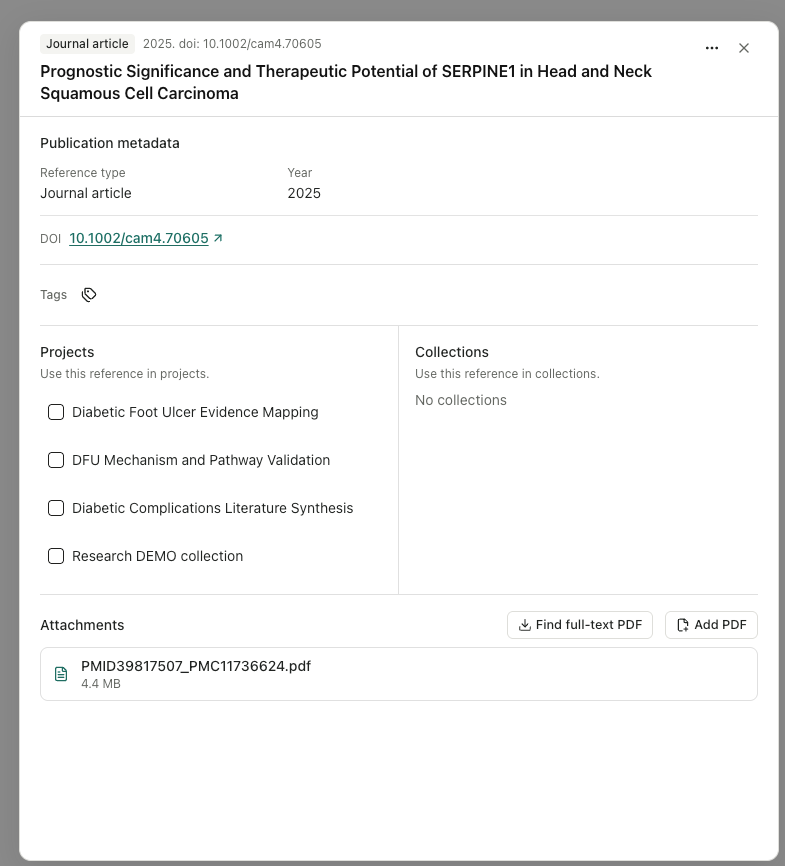
Researchers can import references using identifiers or files, review incoming items in an Inbox, organize records with collections and project links, compare possible duplicates, and bulk-merge duplicate records while preserving attachments. Reference metadata, project associations, collections, ratings, tags, notes, and PDF attachments remain visible for review.
Screenshot: actual Open-Science product interface containing example literature metadata.
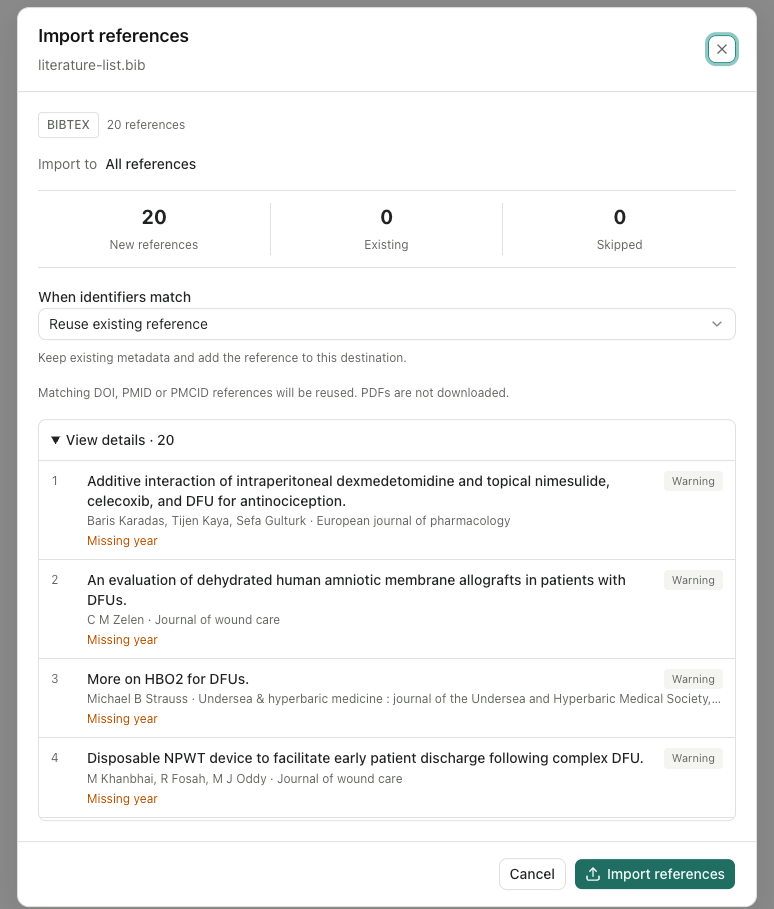
The import workflow can identify new, existing, and skipped references before the user commits a batch. Identifier matches can reuse existing records, helping researchers avoid creating unnecessary duplicates while keeping the decision visible.
Screenshot: actual Open-Science product interface containing example import records.
For public full text, the library can query Europe PMC, PubMed Central, OpenAlex, arXiv, and Unpaywall in parallel where applicable. Availability depends on each source, the article’s open-access status, and any optional credentials.
One PDF—or a bounded reading set of up to three PDFs—can enter Reading Context for agent-assisted reading and search. Researchers can also format references with built-in or imported CSL styles and create a newly formatted version of a Word, text, or Markdown artifact while retaining available provenance information.
The library is a first-generation workspace. Metadata alone is not full-text evidence, public PDFs are not available for every record, and generated summaries or citations still require researcher review against the original sources.
Choose Apodex and refreshed OpenAI or Anthropic models
Apodex is now a built-in provider. Open-Science lists apodex-1.1 and apodex-1.1-mini with 262,144-token context registrations and routes them according to the selected agent framework’s supported protocol.
The built-in OpenAI and Anthropic catalogs also add GPT-6 Astra and Claude Fable 5.1. Open-Science registers GPT-6 Astra with a 1,050,000-token context and Claude Fable 5.1 with a 1,000,000-token context, together with the supported reasoning-effort controls documented in the v0.26.0 release notes.
Provider availability, account access, pricing, quotas, regions, and endpoint compatibility remain subject to the provider and the active agent framework.
Read common tool activity without parsing raw JSON
Artifact writes and notebook controls now appear as compact summary cards in messages and permission approvals. The cards surface relevant fields for operations such as artifact writes, runtime selection, kernel restarts, bindings, and kernel state.
Summary cards help researchers understand what the agent is asking to do before granting permission and make long-session activity easier to review. They do not remove the underlying execution record; detailed activity, logs, artifacts, and notebook state remain available when deeper inspection is needed.
What else is new in v0.26.0?
The release reduces avoidable interruptions, adds controls for previews and session configuration, and improves the handling of large Skills and long-running sessions.
- Safer default permissions: routine read-only inspections of notebook state, memory, and package inventories—and progress updates for an approved plan—can proceed without repeated approval prompts. Grants remain visible and revocable in Settings.
- Preview context menus: right-click actions can copy a path, download content, save local files as artifacts, inspect provenance, or return to the originating context when the action applies.
- Inspectable Skill approvals: a Skill-load approval can expand the full Skill document before the user decides whether to approve it.
- Task API session configuration: the CLI, HTTP API, and SDK can inspect or update a session’s model, reasoning effort, memory setting, and compute-host selection without submitting a prompt.
- Large Skill imports: asset-heavy Skill bundles containing tens of thousands of files can be imported more reliably.
- Smoother long sessions: streaming avoids duplicate pacing and bottom-follow flicker, resource use is bounded, transcript rescans are reduced, and selected file-verification work is cached.
The public Task SDK also removes legacy session-plan continuation fields. Clients that relied on those fields must use the current session and plan APIs; approved plans are rebuilt from durable session state for new attempts.
Bug fixes that affect daily use
Open-Science v0.26.0 includes fixes across compute, artifacts, sessions, providers, Skills, connectors, updates, accessibility, storage, and remote access.
Notebook and runtimes: Protected Windows REPL startup is restored; Windows R detection uses Rscript; standard launches preserve stdin; managed runtime state is isolated; repair and package outcomes are reported correctly; reused cell languages and run inputs are preserved; abandoned code-write streams can recover; and installer caches remain inside managed runtime storage.
Files, artifacts, and previews: Previews stay aligned with artifact publication; text reads retry while publication is in progress; managed resources remain pinned across pagination; finalization can recover in multi-message turns; standalone attachments return after publication; CSV counts and Unicode title search are corrected; and completion rows avoid height-change flashing.
Sessions and persistence: Branch context survives failed forks; newer metadata wins during lazy hydration; streamed chunks survive clock rollback; deletion boundaries and compensation failures remain recorded; retained artifacts stay readable; stalled provider deletions time out; concurrent project deletions remain isolated; and message snapshots are durable.
Agents, providers, and delegation: Provider state survives asynchronous completions; validation stays scoped to the intended model target; tool content and response semantics are preserved; agent-process ownership holds across recovery and permission waits; delegation results and lifecycles persist; Specialist recovery retains approved capabilities; and custom provider URLs reject unsafe redirects.
Skills, connectors, and memory: Skill packages retain integrity across edits and imports; connector data and credential updates recover correctly; connector response bodies are released and call budgets enforced; and memory edits receive stronger guards while short search terms continue to work.
Updates and workspace: Windows installers check for locked update targets; the Linux application menu remains visible; startup waits are bounded; quitting is guarded until runtime handover; live proxy state is restored after a failed apply; diagnostics and status refreshes are more reliable; and accessibility, contrast, hover feedback, and keyboard navigation are restored.
Archiving, storage, and remote access: Archiving waits for compute jobs to finish; delayed archive or restore commands cannot pass stale preconditions; failed workspace deletion can be retried from the dialog; data-location migration preserves references and recovery semantics; credential and remote-access recovery are restored; and usage records retain execution identity.
Install or update
Open-Science v0.26.0 supports macOS 12 or later on Apple Silicon or Intel, Linux x64, and Windows 10/11 x64. Download the appropriate DMG, AppImage, Debian package, or Windows installer from the official v0.26.0 release page. Existing installations can update in place.
Official macOS release builds are Developer ID signed and notarized. Windows builds do not yet have an Authenticode certificate, so SmartScreen may display an “unrecognized app” warning; verify that the installer came from the official release page before proceeding.
Resources
- Open-Science v0.26.0 release notes and downloads
- Open-Science product page
- Open-Science source repository
- AIPOCH
- Open-Science v0.25.1: Recovery and Reliability Fixes
- Run Research Tasks on Remote SSH Hosts with Open Science
- How Open-Science Reads Multiple PDFs and Links Evidence Back to the Source
- Open-Science v0.18.1: Session Compute and Clearer Alerts
FAQ
Does Open-Science v0.26.0 support Slurm clusters?
Yes. A registered remote host can use Direct SSH or Slurm execution mode, and notebook work can run as a Slurm job with durable submission, polling, recovery, cancellation, and cleanup. The cluster must already be available, and its administrator continues to control scheduler and security policy.
What can researchers store in the Literature Reference Library?
The library stores reference records, project and collection relationships, organizational fields, and associated PDFs. It supports identifier-aware imports, duplicate comparison and bulk merge, public full-text lookup, Reading Context, and citation formatting, but researchers must still review source content and formatted output.
Can Open-Science v0.26.0 find open-access PDFs?
It can look for applicable public full text through Europe PMC, PubMed Central, OpenAlex, arXiv, and Unpaywall. A PDF is not guaranteed for every reference because availability depends on source coverage, open-access status, and optional credentials.
Which new models are available in Open-Science v0.26.0?
The release adds built-in Apodex support for apodex-1.1 and apodex-1.1-mini, plus GPT-6 Astra and Claude Fable 5.1 in the refreshed OpenAI and Anthropic catalogs. Actual access depends on provider availability, account permissions, and the selected framework’s endpoint compatibility.
Does v0.26.0 submit jobs to cloud GPU services?
No. Remote compute in this release covers Direct SSH and Slurm; cloud GPU submission is not built yet. Open-Science also does not provision or administer the target cluster.
Disclaimer
This article is intended for informational purposes only and does not constitute medical advice, clinical guidance, diagnostic recommendations, treatment decisions, or validated scientific conclusions. Example literature records shown in the product screenshots do not represent a validated research finding or recommendation.
Open-Science is a research workflow tool. It does not replace researcher judgment, and researchers remain fully responsible for evaluating the accuracy, completeness, and appropriateness of generated outputs. All outputs require independent verification and expert interpretation before use in any research context.
References and external links in this article are provided for informational purposes. AIPOCH does not endorse and is not responsible for the content of third-party sources.