Open Science v0.26.0
This Wiki was verified against the stable v0.26.0 release, source commit 5df494a57ac67727c4153c707708a7b1727e968c. It is a catch-up from the previously documented v0.25.1 release.
Main workflows
Literature reference library
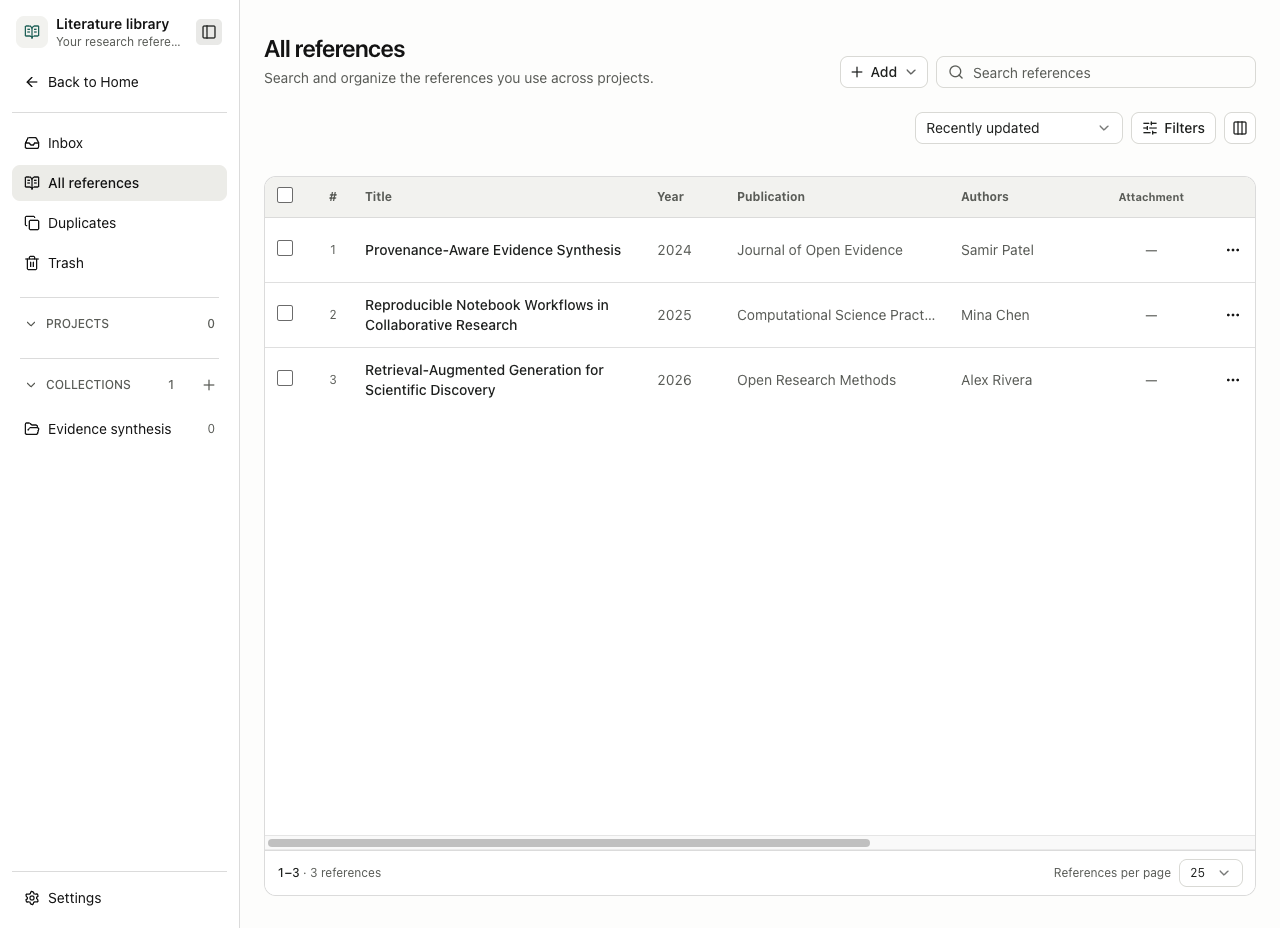
The new local reference library imports individual PDFs and BibTeX, RIS, or NBIB records; organizes references into collections and projects; finds duplicates; attaches selected open-access PDFs; and formats citations with revision provenance. Agent-discovered references enter an Inbox instead of silently joining the library. See Literature Library.
Slurm execution for remote compute
Each SSH host now has an Execution mode: Direct SSH or Slurm. Slurm mode submits scheduler-owned jobs, polls durable state, recovers after interruption, cancels through the scheduler, and cleans up staged files. The built-in Compute Environment Setup skill produces setup, repair, and removal instructions for the selected host; review them yourself or send them to the cluster administrator.
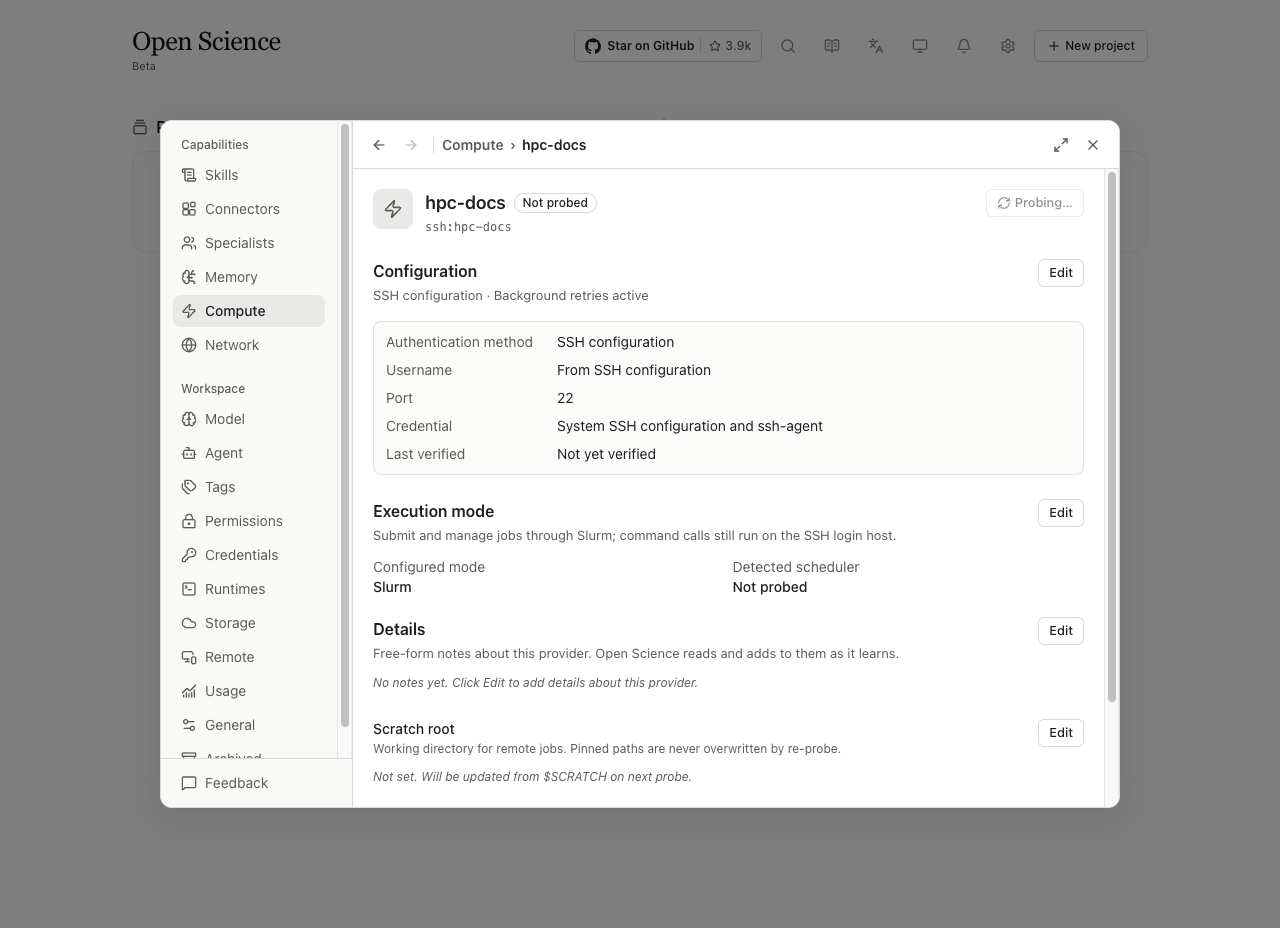
Do not select Slurm merely because sbatch exists. Confirm the login host policy, partition/account/QoS defaults, scratch path, module or environment setup, wall-time limits, and cancellation rules. Open Science does not provision the cluster or grant scheduler access.
Readable tool and approval cards
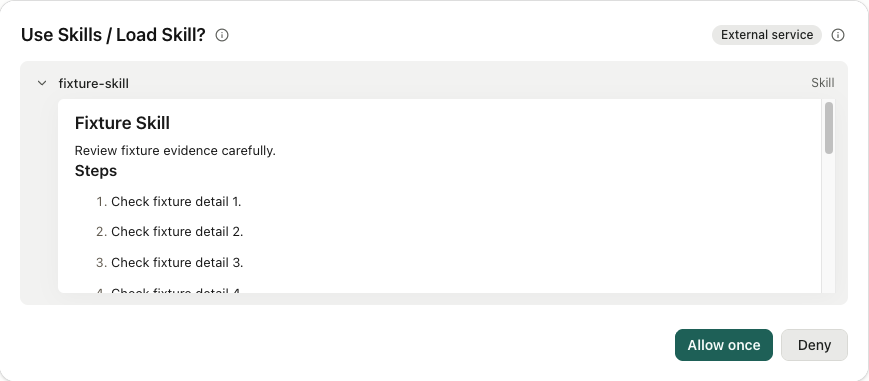
Artifact writes and common notebook controls render as compact summary cards instead of raw JSON. Expand the card when exact arguments, paths, versions, or execution state matter. Skill-load approval cards can expand the complete SKILL.md before a decision.
Providers and model catalogs
Apodex is available as a built-in provider with apodex-1.1 and apodex-1.1-mini. The bundled catalogs also include GPT-6 Astra and Claude Fable 5.1 with supported reasoning controls. A catalog entry does not provide credentials, access, or capacity; the installed picker and a successful connection test are authoritative.
Other user-visible changes
- Permissions: routine read-only notebook/runtime inspection, memory lookup, package inventory, and approved-plan progress updates have safer default grants. Grants remain visible and revocable in Settings.
- Preview menus: right-click preview content to copy a path, download, or save a local file as an artifact. Managed artifacts can expose provenance and return-to-context actions.
- Task API: CLI, HTTP, and SDK clients can inspect or update a session's model, reasoning effort, memory setting, and compute-host selection without sending a prompt.
- Large Skills: imports containing tens of thousands of files use a bounded, faster path and retain package integrity checks.
- Reliability: streaming, long-session resource use, plan recovery, update handling, notebook runtimes, artifact publication, persistence, provider state, credentials, remote access, storage migration, and accessibility received recovery and correctness fixes.
Breaking Task SDK change
Legacy session-plan continuation fields were removed from the public Task SDK contract. Clients must read current session and plan state through the supported APIs. Test integrations that deserialize the old fields before upgrading; this change affects API consumers, not ordinary desktop conversations.
Verification limits
The exact v0.26.0 tag installed, type-checked, and produced Electron and Web production builds in a disposable checkout. Real Electron fixture tests exercised Slurm execution-mode persistence and expanded Skill approvals, and a disposable library catalog produced the screenshot above. Library metadata import, duplicate, citation, and full-text behaviors were additionally checked against implementation and automated tests. No real cluster, paid provider, OAuth account, external model call, publisher account, or personal research library was used. Slurm scheduling and public full-text provider responses therefore remain code-and-test verified rather than externally exercised.