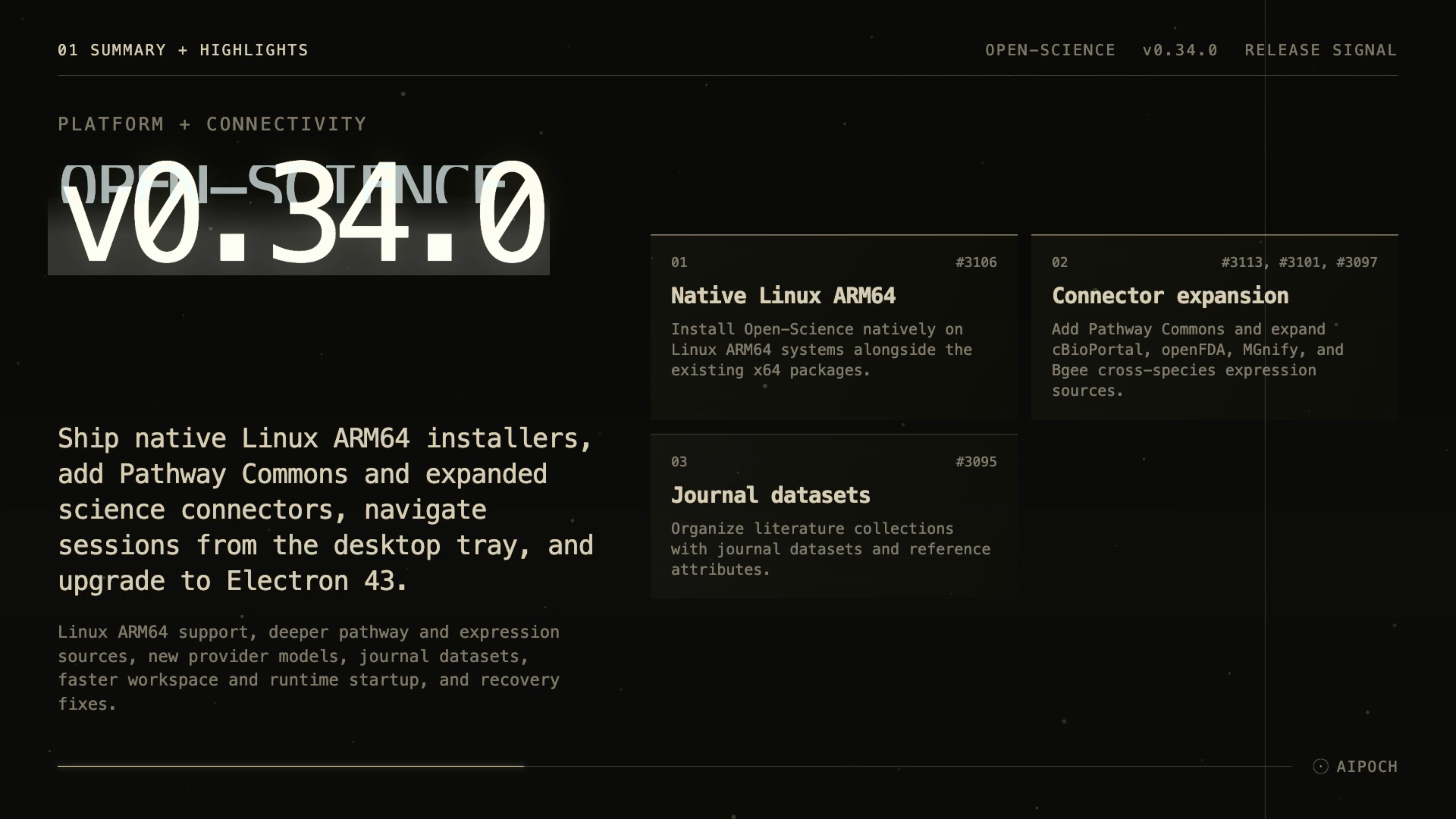
AIPOCH Open-Science v0.34.0 adds native Linux ARM64 installers, broader scientific data access, journal datasets, and faster desktop navigation.
AIPOCH Open-Science is an open-source, local-first, model-agnostic, self-hosted AI research workbench for reproducible scientific discovery, developed by AIPOCH.
What new capabilities help researchers reach more data in v0.34.0?
The v0.34.0 release, published September 28, 2026, focuses on platform access, pathway and expression data, literature organization, and session navigation. Each capability is available in the released build and remains subject to the selected provider, connector permissions, and local environment.
Native Linux ARM64 installers
Linux researchers working on ARM workstations or Apple Silicon Linux virtual machines can now install Open-Science with native ARM64 packages. Version 0.34.0 ships Linux ARM64 installers alongside the existing Linux x64 packages, so the package architecture can match the host rather than relying on an x64 compatibility layer.
Choose the ARM64 package when the Linux host reports an ARM64 architecture, and choose x64 for an x86_64 host. The installer adds another deployment path; it does not change the compute, model, or connector requirements of the research workflow.
Pathway Commons connector for pathway and interaction queries
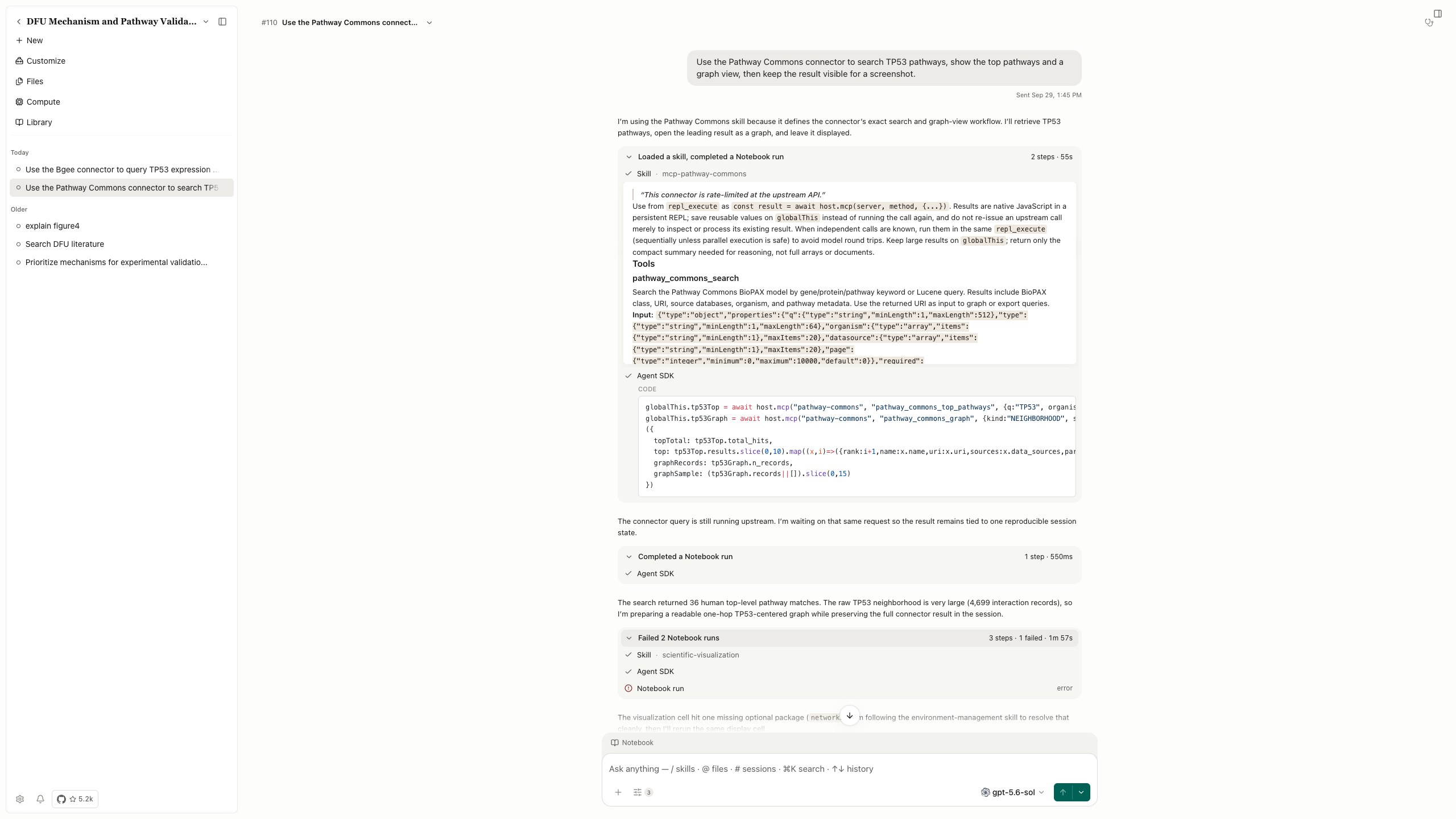
Pathway Commons support lets researchers search pathways, list top pathways, inspect interaction graphs, and export returned results from a research session. These operations are useful when a question requires a pathway-oriented view before a researcher decides which records or networks to analyze further.
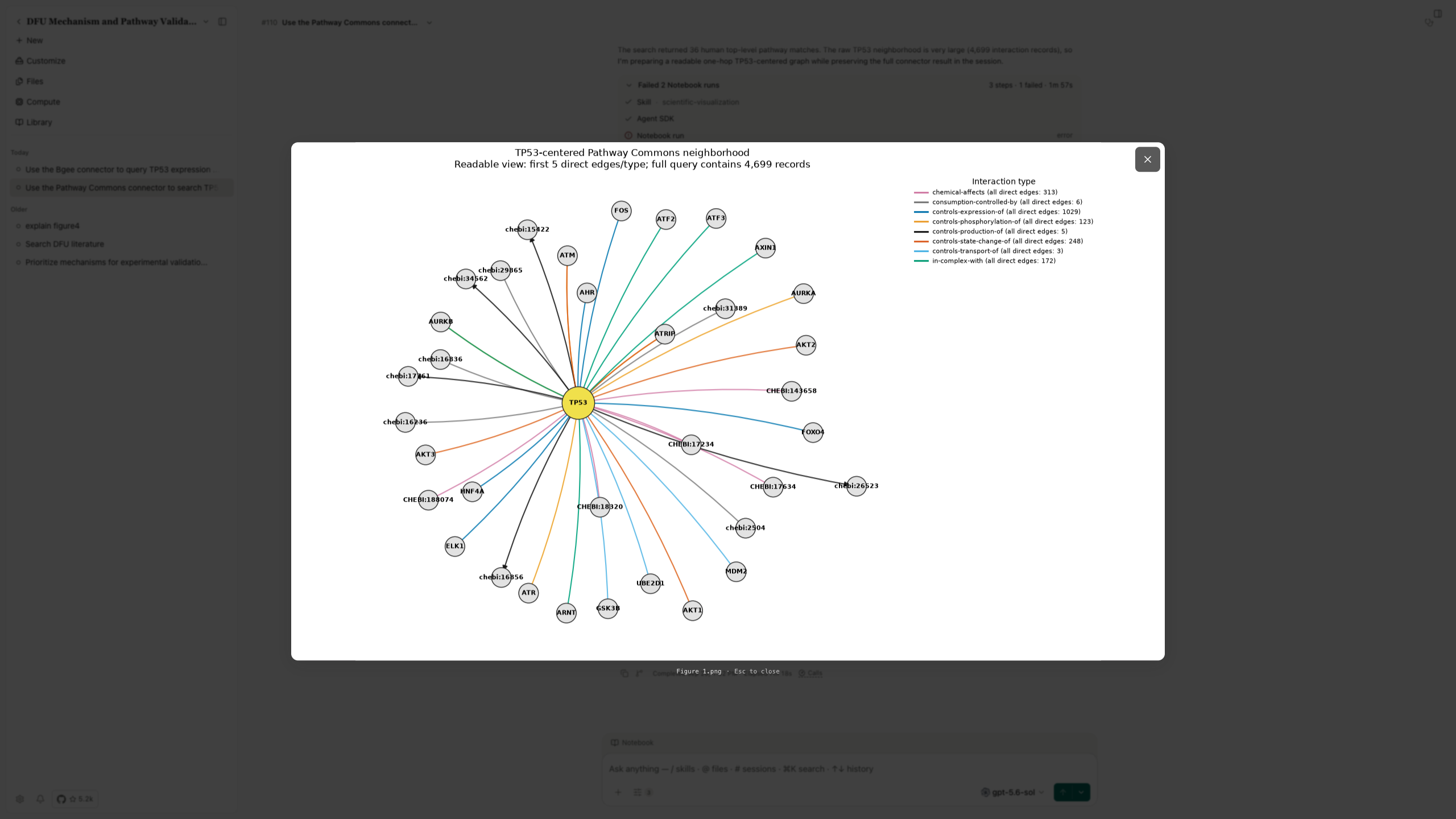
The connector returns query results for inspection and downstream workflow steps. It does not establish that a pathway or interaction is biologically correct, and exported results still need source and method review.
Expanded cBioPortal, openFDA, MGnify, and Bgee access
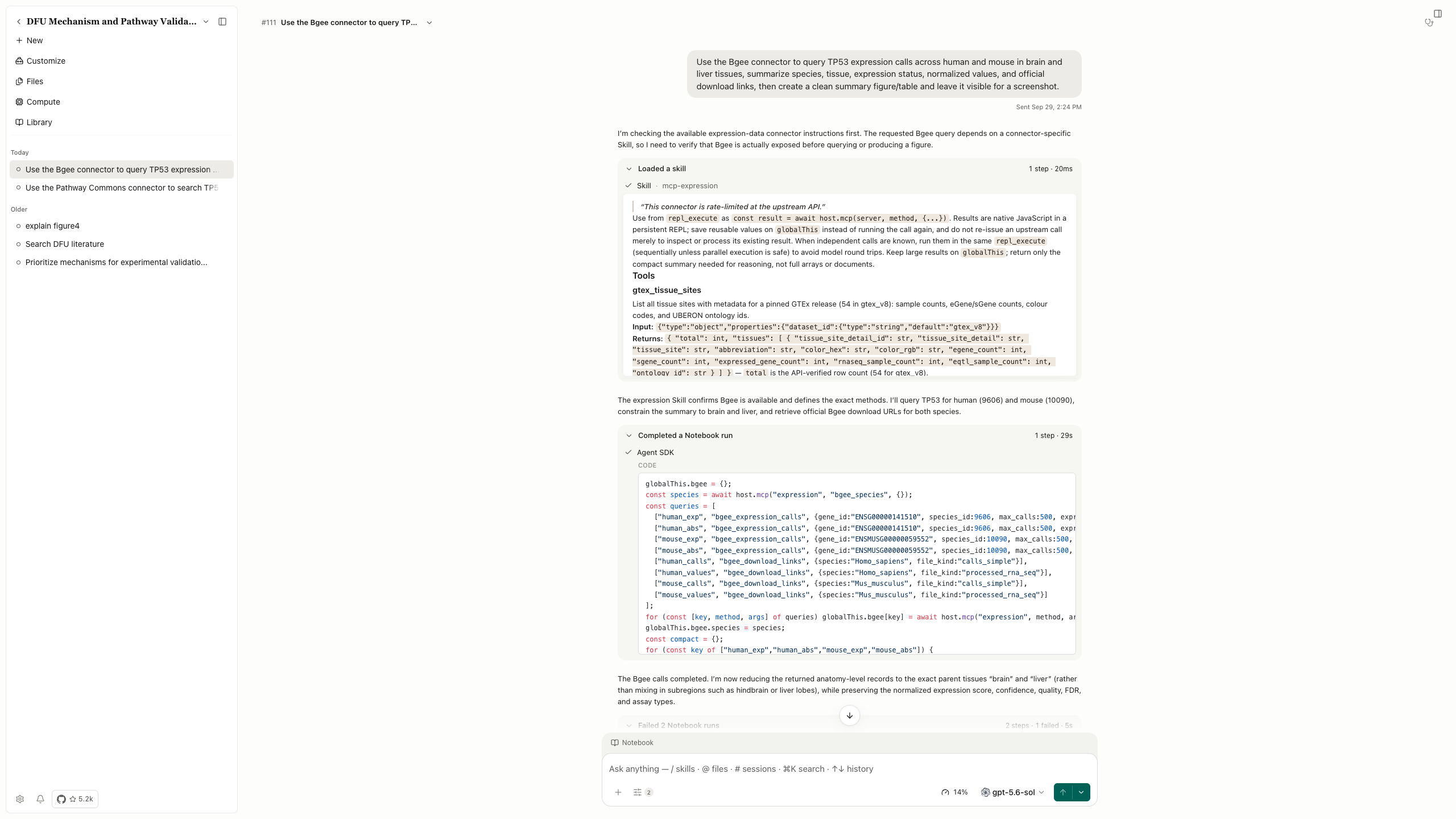
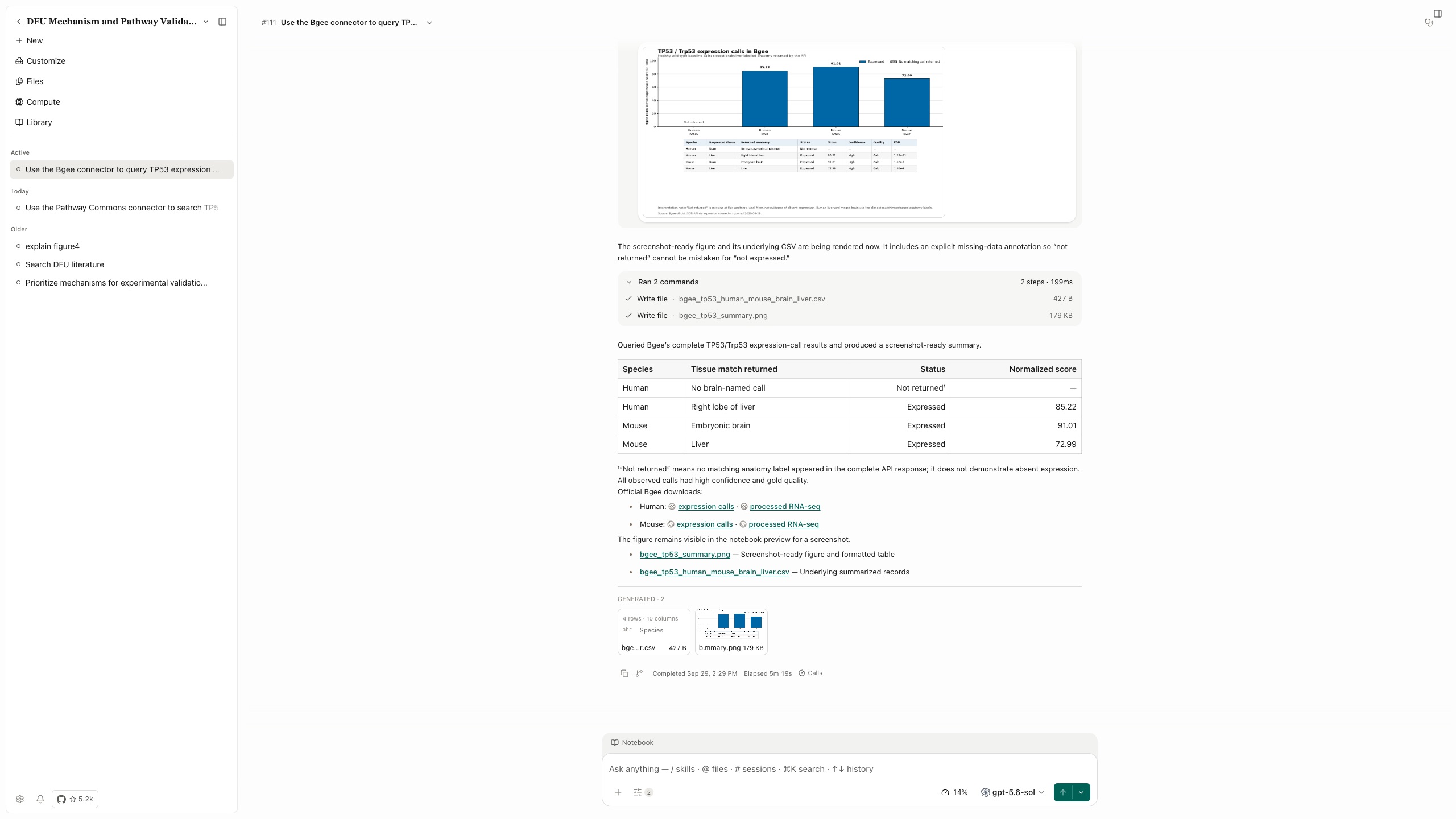
Version 0.34.0 expands the query coverage of several existing scientific connectors. The cBioPortal connector, openFDA, and MGnify connector expose broader search paths, while Bgee adds cross-species expression calls, download links, and SPARQL queries.
For a cross-species expression question, Bgee can provide expression calls and links to relevant downloads across species. For pathway, cancer-genomics, regulatory, or metagenomics work, the expanded connector operations can reduce the need to switch tools before comparing records. The returned data remains an input for researcher review; connector availability and upstream service responses can vary.
Journal datasets and reference attributes in the literature library
The literature library now supports journal datasets with reference attributes for organizing collections. A researcher can use dataset and reference metadata to structure a collection around a journal source, then inspect the associated records in the library workflow.
This release also adds workspace reference actions and refines library reference preview and message scopes. These actions keep a literature reference available in the relevant workspace context, while the preview and scope changes make it clearer which references are being used for a task. They do not guarantee that every reference has a usable full text or that an extracted citation is complete.
Tray session navigation and a newer desktop runtime
On desktop systems, the tray menu now lists sessions for quick switching without first opening the main window. This gives researchers a short path back to a specific project or session when several investigations are active.
The application also upgrades to Electron 43. The runtime update is part of the shipped desktop build; it does not change the scientific meaning of a connector response or replace review of the session record.
What else is new in v0.34.0?
Version 0.34.0 also updates model options, workspace startup, and everyday reference handling:
- Additional provider options. MiniMax M3.1 Flash Preview and Claude Sonnet 5.5 are available as built-in provider choices. Actual availability depends on the selected agent backend, endpoint compatibility, account, region, and installed version.
- Workspace reference actions. Literature references can be used through workspace actions, with refined preview and message scopes for context-sensitive work.
- Faster workspace switches. Session rows remain available during workspace switches, reducing the work needed to reorient after changing projects.
- Lean interpreter discovery. Runtime startup spawns fewer interpreter-discovery subprocesses.
- Package and replay boundaries remain explicit. The release supports replayable per-version verification and RO-Crate packaging, while full-session replay and solver-exact equivalence remain open limitations. A verification check covers a captured version, not an entire research session.
These changes are described in the official v0.34.0 release notes, which remain the source for the implemented feature scope.
Bug fixes that affect daily use
The v0.34.0 fixes cover session recovery, literature work, runtimes, remote compute, and workspace controls:
- Sessions and recovery. Serialized redacted bearer values are recognized, recovery can resume after agent connection errors, new conversations can start during send preparation, and delegation can return after a stop and restart. Native context compaction, continuation admission, subagent history, and background Notebook previews also receive reliability fixes.
- Literature and PDF work. Figure and table extraction is hardened, missing literature metadata and PDF import details can be recovered, references open from the library preview, and preview spacing is tightened.
- Reviewer and runtimes. Interrupted correction assessments can resume. The Codex runtime now requires a supported CLI and can repair outdated runtimes.
- Remote compute. macOS remote directory listings are supported, while WSL runtime readiness and lifecycle notifications receive additional protection.
- Workspace controls. Edit protection, library batch selection, keyboard focus, escape navigation, layout, accessibility, and workflow regressions are addressed. Settings and permission explanations are clearer, and the Claude installer handles redirects and HTML responses.
Install or update
Download AIPOCH Open-Science v0.34.0 from the official release assets. Supported targets are macOS 12 or later on Apple Silicon or Intel, Linux x64 or ARM64, and Windows 10/11 x64. Existing installations can update in place.
For Linux, select the package that matches the host architecture. Official macOS builds are signed and notarized, and official Windows builds are code-signed; verify that the package came from the release page before installing. The onboarding wizard checks the environment on first run and can install and configure an app-managed agent runtime.
After updating, a practical first check is to open a project, switch between two sessions from the tray, and run a small connector query whose source and returned records you can inspect. For an ARM64 Linux host, confirm that the native ARM64 package is selected before starting the setup.
Resources
- AIPOCH Open-Science v0.34.0 release and downloads
- AIPOCH Open-Science product overview
- AIPOCH
- AIPOCH Open-Science v0.31.1: Genomics and Model Routing
- AIPOCH Open-Science v0.31.0: Fork Research Sessions
- AIPOCH Open-Science v0.30.2: Windows R Recovery and Faithful Notebook Replay
FAQ
Does v0.34.0 support Linux ARM64?
Yes. AIPOCH Open-Science v0.34.0 ships native Linux ARM64 installers alongside Linux x64 packages. Choose the package that matches the host architecture; ARM64 support does not remove the need to configure the selected model provider and research tools.
What can the new Pathway Commons connector do?
It can search pathways, list top pathways, inspect interaction graphs, and export results from a research session. Those results are inspectable inputs for a researcher’s next step, not an independent validation of pathway biology.
Which scientific connectors were expanded in v0.34.0?
The release expands cBioPortal, openFDA, and MGnify query coverage and adds Bgee cross-species expression calls, download links, and SPARQL queries. A new Pathway Commons connector adds pathway and interaction operations; access still depends on connector permissions and upstream service availability.
Can I organize literature with journal datasets?
Yes. The literature library adds journal datasets with reference attributes, plus workspace reference actions and refined preview scopes. These features help organize and inspect collections, but they do not guarantee complete full text or citation metadata for every record.
Does v0.34.0 replay a complete research session exactly?
No. The release supports replayable per-version verification and RO-Crate packaging, while full-session replay and solver-exact equivalence remain open limitations. Review the captured version, inputs, execution records, and outputs before treating a workflow as reproducible.
Disclaimer
AIPOCH Open-Science assists researchers with research workflows but does not replace scientific judgment or peer review. Connector results, literature metadata, extracted figures and tables, model outputs, and verification records require independent review of source data, methods, assumptions, and context before use in research.