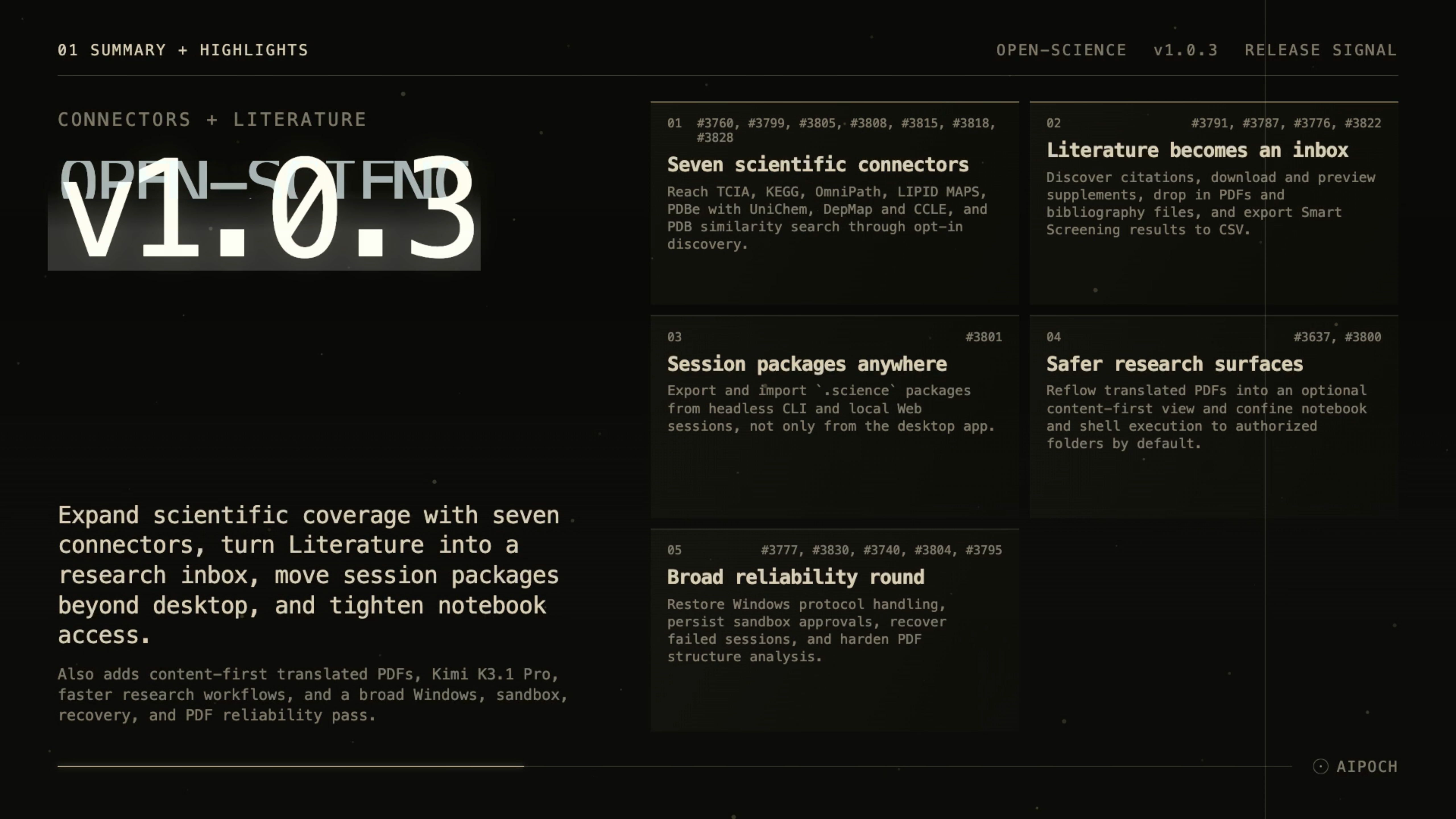
Version 1.0.3 expands scientific data access and turns Literature into a stronger research inbox while extending .science packages beyond the desktop.
AIPOCH Open-Science is AIPOCH’s open-source, local-first, model-agnostic AI research workbench for inspectable scientific workflows.
What new capabilities help researchers expand data and literature workflows?
AIPOCH Open-Science v1.0.3 helps researchers reach more scientific sources, move papers and attachments through one Literature inbox, and carry selected research records beyond the desktop, while keeping new connector discovery opt-in and every screening, import, and package decision subject to researcher review.
Seven new connector tools span imaging, pathways, lipids, structures, molecular regulation, and cancer models, with opt-in discovery and persisted source choices (AIPOCH v1.0.3 release notes, 2026). Literature gains citation discovery, supplementary attachments, drag-and-drop imports, and Smart Screening CSV export (AIPOCH v1.0.3 release record, 2026). .science imports remain read-only records and do not rerun calculations, grant credentials, or replace artifact-level reproducibility checks (AIPOCH .science package guide, 2026).
Seven scientific connector tools
Research questions often span sources that expose different identifiers, query conventions, and access controls. Version 1.0.3 adds tools for The Cancer Imaging Archive, KEGG, OmniPath, LIPID MAPS, PDBe with UniChem, DepMap with CCLE, and PDB structure similarity search.
The new tools let researchers query imaging collections, pathways, molecular regulation, lipid compounds, structure validation, chemical cross-mappings, cancer cell-line dependencies, and three-dimensional structural similarity from the same permissioned workbench. The release keeps discovery default-off and saves each source choice, so availability remains an explicit configuration decision rather than an assumed connection.
Literature becomes a research inbox
Literature work becomes easier to review when discovery, files, and screening decisions stay together. Version 1.0.3 can surface references and citing papers through Semantic Scholar, download and preview supplementary attachments, accept dropped PDFs or bibliography files, and export Smart Screening results as CSV.
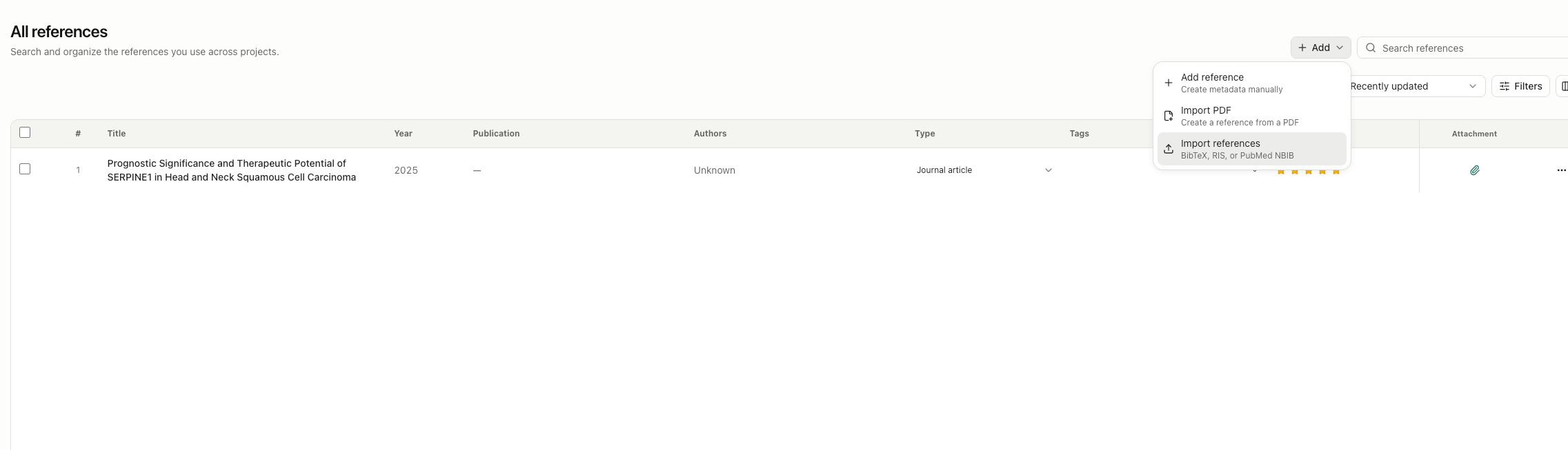
The Literature Add menu brings PDF and bibliography-file imports into the reference workspace.
The CSV covers all screening candidates with final verdicts, manual decisions, reasons, and model probabilities. Those fields support spreadsheet review; model probabilities do not establish study quality, inclusion validity, or scientific truth. Researchers still decide what enters a review and should inspect source papers and available full text.
.science packages move beyond the desktop
A .science package can carry selected conversation branches, file versions, Notebook records, and verification evidence for review, handoff, or archiving. Version 1.0.3 adds export and import from headless CLI and authenticated local Web sessions, extending package work beyond the desktop interface.
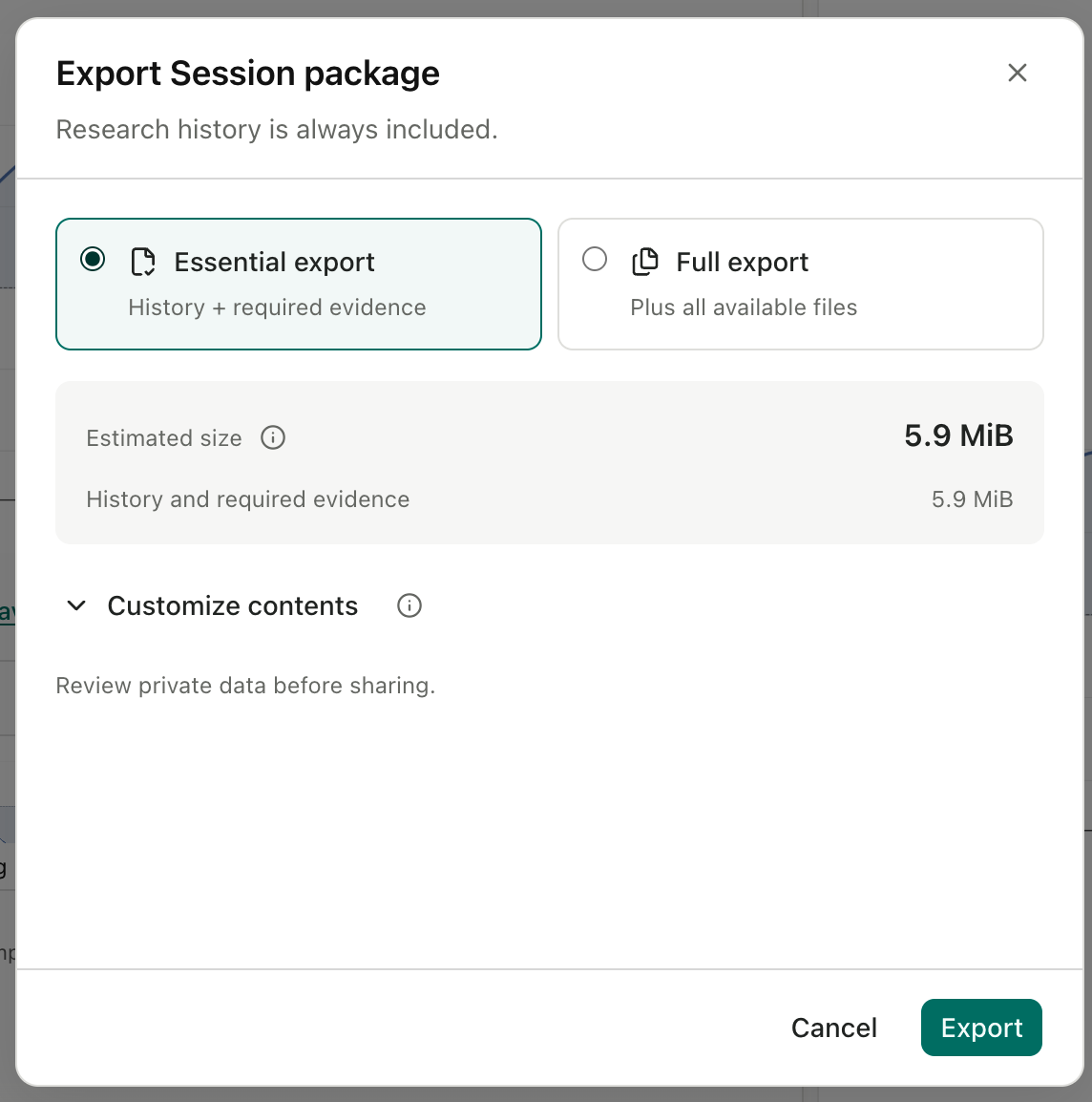
The desktop export dialog lets researchers choose an Essential or Full package and customize included content; v1.0.3 separately extends package transfer to headless CLI and local Web sessions.
The receiving record remains read-only and does not execute code or restore credentials. Side Chat conversations and private reading bookmarks are excluded, included files depend on export selection, and received verification records describe the sender’s checks rather than proving that the receiving computer reran them. Researchers can create a separate writable continuation after reviewing local inputs, dependencies, and permissions.
Translated PDFs and notebooks gain narrower working surfaces
Version 1.0.3 adds an optional content-first translated-PDF layout that reflows body text and captions into a single-column reading view while retaining images, tables, formulas, references, and source-to-output page mappings. The option is off by default and remembered for each translation edition.
New installations also enable Notebook folder restrictions by default, confining Notebook and shell file operations to authorized folders. The boundary applies to the application’s compute runtimes, not the entire computer, and Windows network protection still depends on its one-time administrator setup. Researchers should continue checking translated terminology, complex layouts, scripts, permissions, and external services.
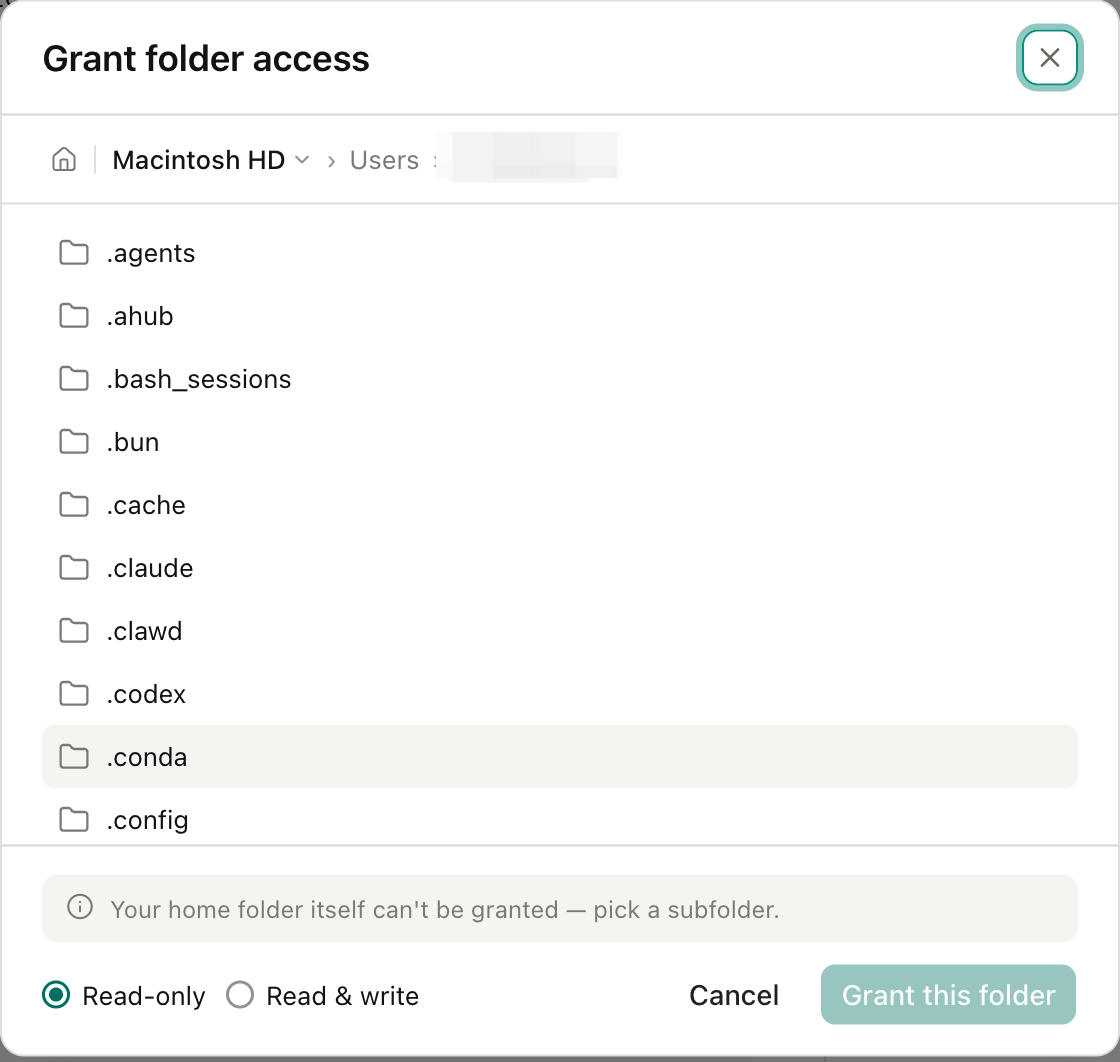
Folder grants define an authorized scope and let researchers choose read-only or read-and-write access for Notebook and shell file operations.
What else is new in v1.0.3?
Beyond the headline workflows, AIPOCH Open-Science v1.0.3 adds a Kimi K3.1 Pro model option, faster large-document and session-package operations, clearer specialist switching, and stronger settings-draft protection, giving researchers a release that improves both visible capability and everyday handling of long-running projects.
Kimi K3.1 Pro becomes selectable while compatibility remains dependent on the active agent framework (AIPOCH v1.0.3 provider update, 2026). Package transfers, repeated import checks, PDF annotation, and large-document structure analysis receive performance improvements (AIPOCH v1.0.3 release record, 2026). Specialist-loading progress and save-state protection cover Memory, Tags, and credential edits (AIPOCH v1.0.3 workflow refinements, 2026).
- Package transfer: Larger archives receive a higher default transfer budget, and imports avoid repeated verification passes.
- Large PDFs: Annotation and structure-analysis paths receive performance improvements without changing the need to inspect extracted content.
- Specialist switching: The interface shows loading progress while a new specialist becomes available.
- Settings editing: Inputs lock during save, while newer unsaved edits remain protected from stale completion results.
Which bug fixes affect daily use?
The v1.0.3 bug-fix round focuses on work researchers feel when Windows protocol links open, sessions recover after model failures, notebook approvals survive restarts, PDF structure analysis rejects misleading fragments, and the composer reflects stop or queued-send state correctly during daily use.
Windows protocol registration is restored, and package-content rehashing is corrected (AIPOCH v1.0.3 Windows fixes, 2026). Recovery changes cover model failures, damaged conversation files, provider rejections, and browser imports suspended during transfer (AIPOCH v1.0.3 recovery notes, 2026). Network approvals, filesystem boundaries, PDF structure ownership, and composer state changes also receive fixes (AIPOCH v1.0.3 sandbox, PDF, and composer fixes, 2026).
- Windows and packages: The
open-scienceprotocol registers again, development notebook hosts rebuild before startup, and package content hashes correctly on Windows. - Session recovery: A model failure no longer has to block recovery, and a damaged conversation file can be removed when required.
- Specialists and composer: Certain provider rejections preserve the conversation, capability failures are separated from missing bindings, and the composer switches correctly between stop and queued send.
- Notebook boundaries: Network approvals persist across restarts, wildcard rules and URL input are accepted, native proxy routing is available, and shell searches remain inside the filesystem sandbox.
- PDF handling: Structure analysis excludes clipped text and wrapped figure references, while figure, table, reader, and single-page preview ownership paths receive fixes.
How can readers install or update AIPOCH Open-Science?
Readers can install AIPOCH Open-Science v1.0.3 as a signed desktop application on macOS, Linux, or Windows, or use the standalone CLI and local Web interface through Homebrew, npm, or platform archives, choosing the distribution that matches their operating system and runtime preferences.
Desktop assets cover macOS 12 or later, Linux x64 or ARM64, and Windows 10 or 11 x64 (AIPOCH v1.0.3 installation matrix, 2026). CLI distributions include macOS, Linux, and Windows archives plus Linux .deb and .rpm packages with a bundled Node runtime (AIPOCH v1.0.3 CLI notes, 2026). npm requires Node.js 22.13 or later, while Homebrew uses separate desktop-cask and CLI-formula commands (AIPOCH v1.0.3 package-manager guidance, 2026).
Choose a supported route:
- Desktop: Download the matching signed asset from the v1.0.3 release. The installed application can update itself in place.
- macOS desktop with Homebrew: Run
brew install --cask open-science. - CLI and local Web with Homebrew: Run
brew install aipoch/tap/open-science, thenopen-science start --no-openandopen-science url. - CLI and local Web with npm: With Node.js 22.13 or later, run
npm install --global @aipoch/open-science. - Standalone CLI: Use the release archive for macOS or Linux ARM64/x64, the Windows x64 ZIP, or the Linux
.debor.rpmpackage.
Check the release asset, architecture, and package manager before upgrading. Homebrew definitions may update on a different schedule from GitHub or npm, so verify the version each channel currently serves.
Where can readers verify the release and learn more?
Readers can verify AIPOCH Open-Science v1.0.3 against the signed GitHub release, consult the product and documentation pages for current workflow boundaries, and use related AIPOCH articles to understand the 1.0 foundation, upgrade path, and broader research-workbench context without relying on private source documents.
The signed GitHub release is the authoritative public record for shipped features, fixes, install assets, maturity, and known limitations (AIPOCH Open-Science v1.0.3, 2026). The current research workflow, permission model, and product scope are summarized on the official product page (AIPOCH Open-Science overview, 2026). Export scope, read-only imports, excluded private material, compatibility, and the difference between evidence and rerunning work are documented separately (AIPOCH .science research-package guide, 2026).
Primary resources:
- AIPOCH Open-Science v1.0.3 release notes
- AIPOCH Open-Science product page
- AIPOCH homepage
- AIPOCH Open-Science documentation
Related AIPOCH articles:
- AIPOCH Launches Open-Science 1.0: Every Discovery, a New Beginning
- AIPOCH Open-Science v1.0.0: Downloads and Upgrade Notes
- AIPOCH Open-Science v0.37.2: Runtime Recovery, Linux CLI
What questions do readers ask about v1.0.3?
Readers most often need to know whether AIPOCH Open-Science v1.0.3 changes connector defaults, whether .science imports execute code, which Literature decisions remain human responsibilities, and how translated PDFs or notebook restrictions affect existing work; the short answers are opt-in, read-only, review-required, and configuration-dependent.
All seven new connector tools use default-off discovery with persisted source opt-in (AIPOCH v1.0.3 connector summary, 2026). Imported .science sessions are read-only, and package metadata does not rerun calculations or grant credentials (AIPOCH .science package guide, 2026). Smart Screening export, content-first translation, and Notebook folder restrictions remain reviewable or configurable workflow features rather than scientific conclusions (AIPOCH v1.0.3 workflow notes, 2026).
Does v1.0.3 enable all seven new connector tools by default?
No. AIPOCH Open-Science v1.0.3 keeps discovery for the seven new connector tools default-off and persists each source opt-in. A researcher must enable the relevant source and still depends on its current availability, access terms, credentials, and workspace permissions.
Can .science packages now move through the CLI and local Web interface?
Yes. Version 1.0.3 adds .science export and import to headless CLI and authenticated local Web sessions, in addition to desktop workflows. Imported records remain read-only, do not execute code or restore credentials, and include files only according to the sender’s export selection.
Does Smart Screening CSV make literature decisions final?
No. The v1.0.3 CSV can include every candidate’s final verdict, manual decision, reason, and model probability, but those fields support researcher review rather than replacing it. Researchers remain responsible for the protocol, source-paper assessment, inclusion decision, and interpretation.
What does content-first PDF translation change?
The optional v1.0.3 layout reflows translated body text and captions into single-column pages while preserving images, tables, formulas, references, and page mappings for comparison. The layout does not establish translation accuracy; terminology, equations, figures, and complex page structures still require checks against the source PDF.
Do Notebook folder restrictions protect the whole computer?
No. New v1.0.3 setups enable folder restrictions for Notebook and shell file operations inside the application’s compute runtimes. The restriction is not a system-wide security boundary, and Windows network protection requires its separate one-time administrator setup.
What limitations and responsibilities apply?
AIPOCH Open-Science v1.0.3 assists researchers with data access, literature organization, package exchange, translation, and computational boundaries, but AIPOCH Open-Science does not replace scientific judgment, source verification, data-governance review, security assessment, or peer review; every connector response, screening result, translated page, and imported record still requires appropriate human evaluation.
Provider compatibility remains framework-dependent, cloud-GPU submission is outside remote-compute scope, review is opt-in and record-scoped, and solver-exact equivalence remains open (AIPOCH v1.0.3 maturity statement, 2026). Inspectable package metadata remains distinct from re-execution, credentials, and artifact-level reproducibility checks (AIPOCH .science package guide, 2026). Project state is local by default, but configured providers, connectors, searches, update services, and remote compute can still receive task-dependent data (AIPOCH Open-Science data-flow overview, 2026).
This article is informational and does not provide medical advice, clinical guidance, diagnostic recommendations, treatment decisions, or validated scientific conclusions. AIPOCH Open-Science is a research workflow tool; researchers remain responsible for assessing inputs, permissions, outputs, methods, evidence, security, and suitability for each use case.