Combine literature search batches
Worked example Solid-state electrolyte interfaces and interphases
Two searches often return overlapping papers. Keep each search's provenance, screen the candidates, then import both batches into one collection with identifier-based reuse. This example retrieves two genuine OpenAlex batches, retains eight records from each and ends with 15 unique references in Library. It demonstrates metadata organization; no full texts were retrieved or appraised.
1. Run and record both searches
In Settings → Connectors, enable Literature Graph and configure its OpenAlex credential if requested. Open a project, start a conversation and select a connected model. The recorded run used Open-Science 0.30.1, Codex subscription / gpt-5.6-sol. No source PDFs are needed.
Use OpenAlex through Literature Graph to build two search batches:
A: solid state electrolyte interface
B: solid state battery interphase
For both use publication dates 2020-01-01 through 2025-12-31,
work type article, explicit relevance sort, and 12 candidates.
Keep all returned titles, DOIs, OpenAlex IDs, source URLs and ranks.
Screen for solid-state battery electrolyte interfaces or interphases;
retain up to eight relevant DOI-bearing records per batch.
Save electrolyte-batch-a.ris and electrolyte-batch-b.ris separately.
Keep an overlap in both RIS files. Save all candidate decisions in
electrolyte-search-provenance.csv and a DOI-normalized union in
electrolyte-merged.csv with source_membership A, B or A|B.
Use absolute HTTPS source URLs. Do not invent missing fields or findings.
Write in English and reopen the saved files.
Inspect the actual Connector activity for the queries, dates and returned counts. The recorded searches returned 12 candidates each, from totals of 94,620 and 15,355 matches. The cap makes these bounded examples, not exhaustive reviews. Both batches come from OpenAlex; two query formulations do not make them independent databases.
2. Inspect the exports before importing
Open electrolyte-merged.csv under Generated. Check the retained titles, DOIs and source membership against the two RIS exports and the candidate audit. The actual union has 15 rows; DOI 10.1007/s41918-024-00212-1 occurs in both batches and is labelled A|B.
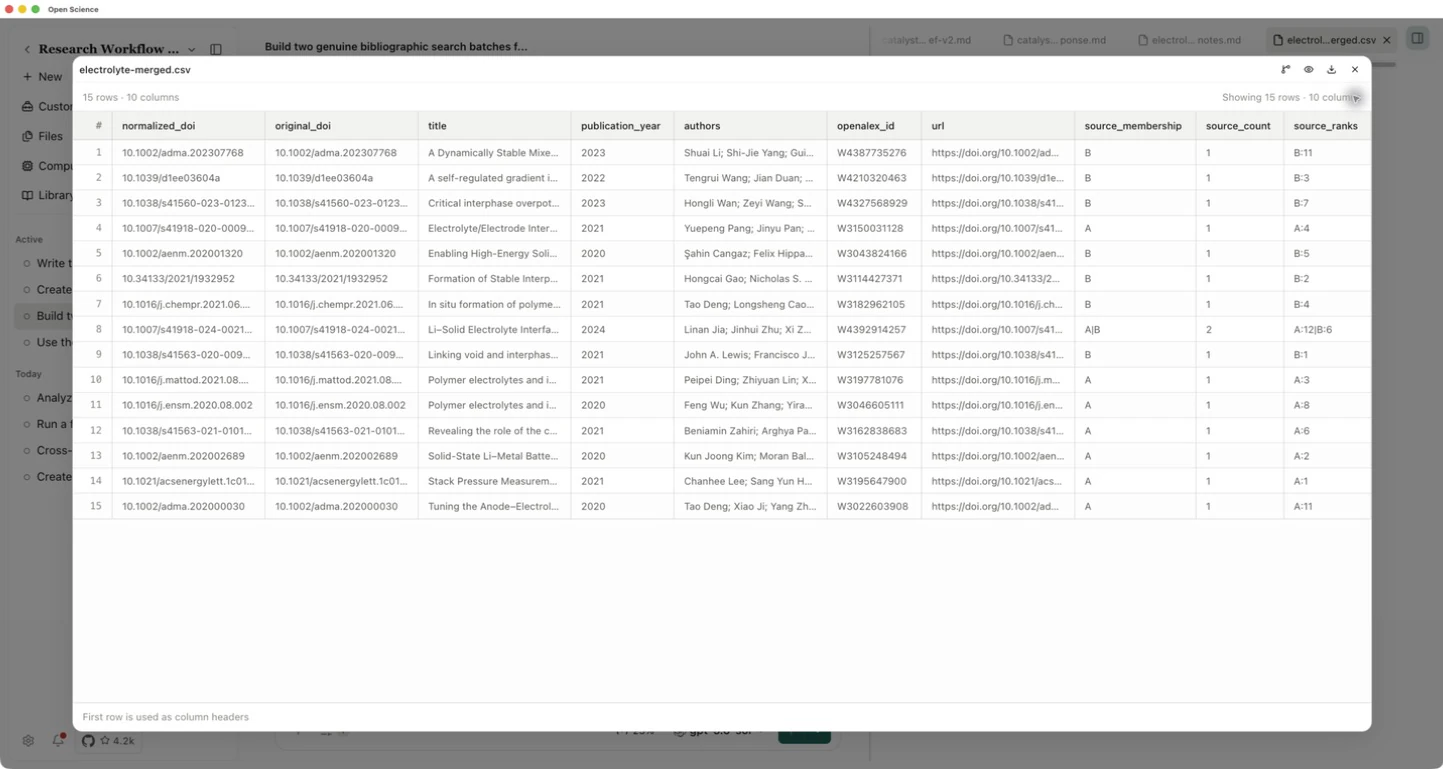
For comparison, trim DOI whitespace, remove an optional DOI URL prefix and compare case-insensitively. Preserve the original identifiers in the source record. Similar titles alone are insufficient evidence that two records are identical; unresolved identifier conflicts need review.
Download batch A, batch B, all 24 candidate decisions and the 15-row union. These are the exports from the recorded run.
3. Import the first batch into a named collection
- Open Library → New collection and create Solid-State Electrolyte Interfaces.
- Select that collection in the sidebar before choosing Import references.
- Choose
electrolyte-batch-a.ris. Check that Import to names the intended collection. - Leave When identifiers match → Reuse existing reference selected. Inspect View details, then choose Import references.
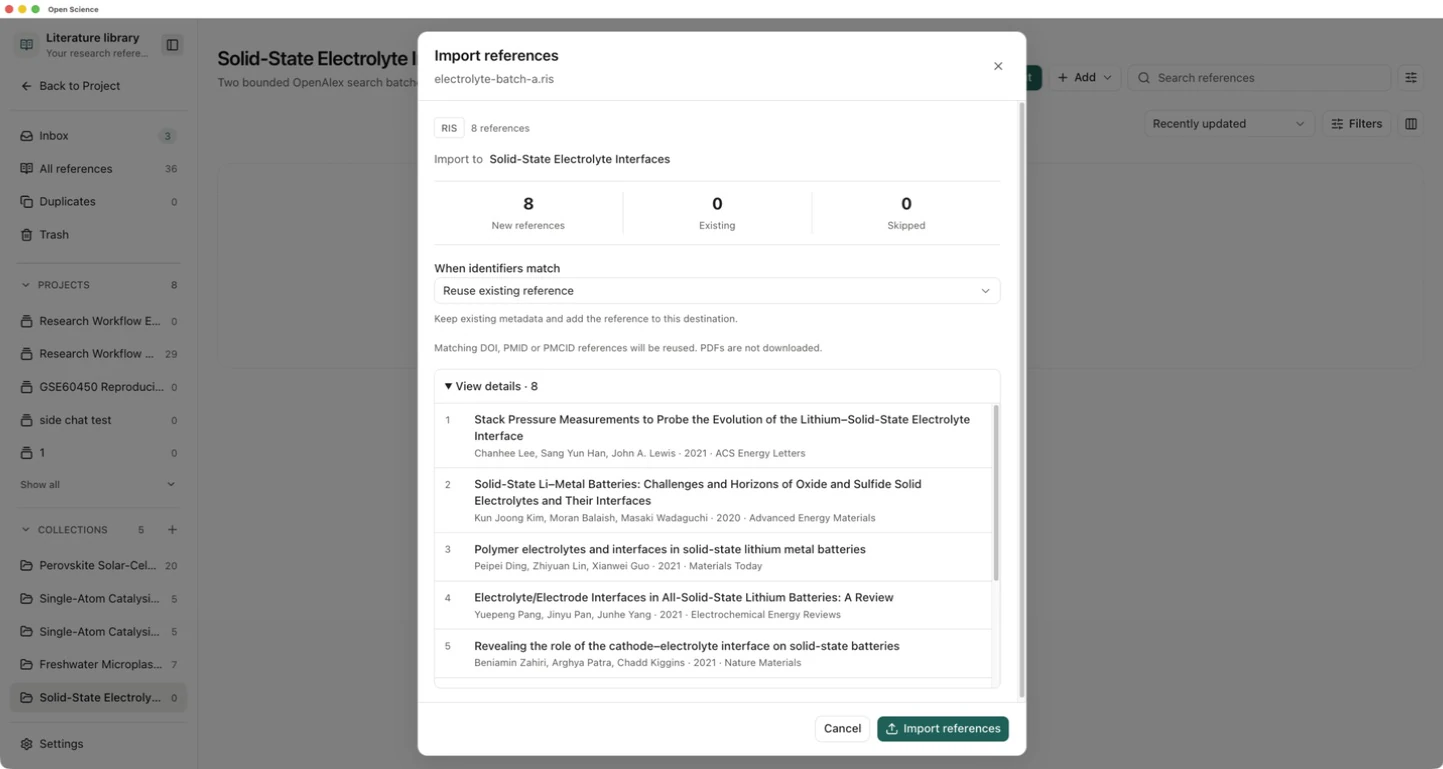
In the recorded library, the first import completed with 8 Created, 0 Reused, 0 Skipped, 0 Failed. Click Done and check the collection. If your library already contains matching records, its created/reused split can differ.
4. Import the second batch and reuse the overlap
With the same collection selected, import electrolyte-batch-b.ris. The preview should identify existing records before committing the import. In this run it showed 7 New references, 1 Existing, 0 Skipped.
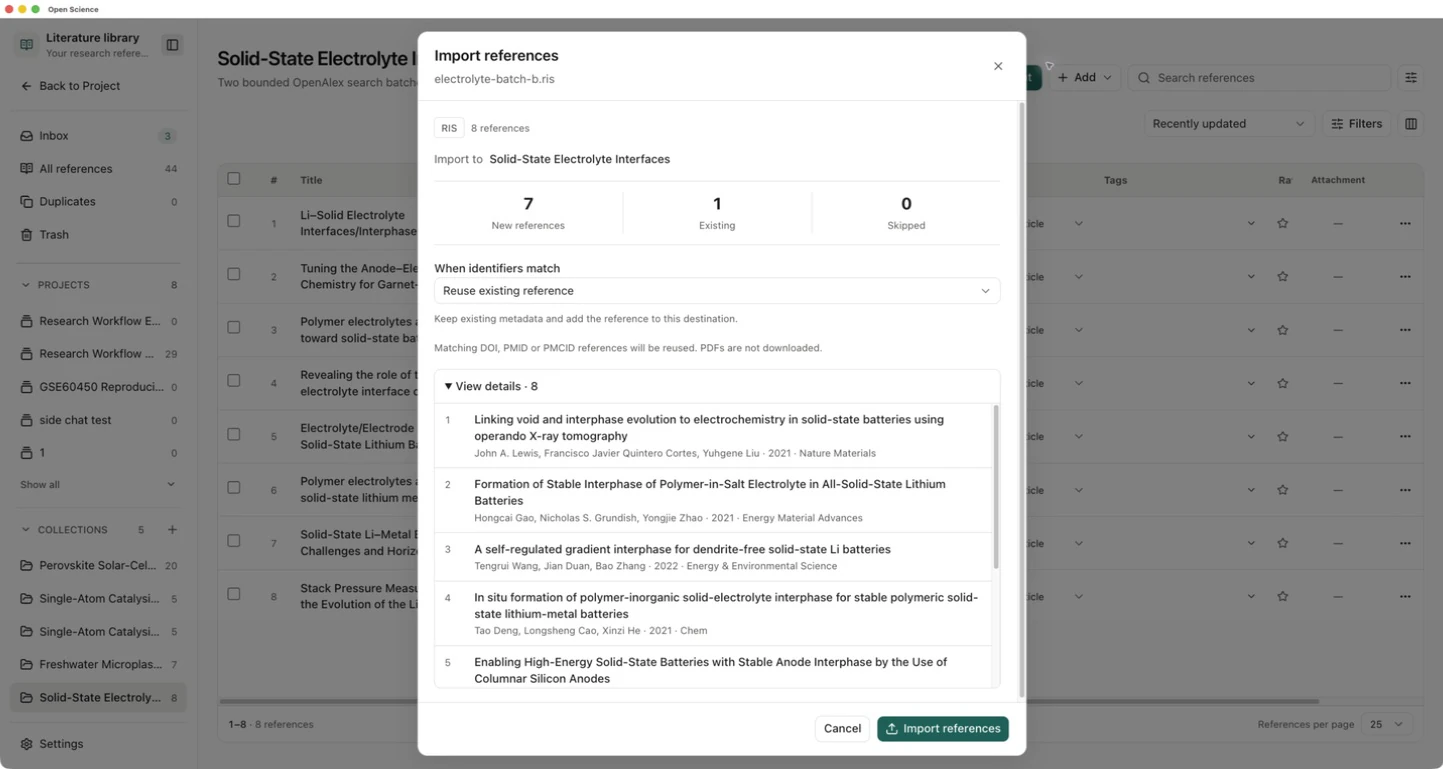
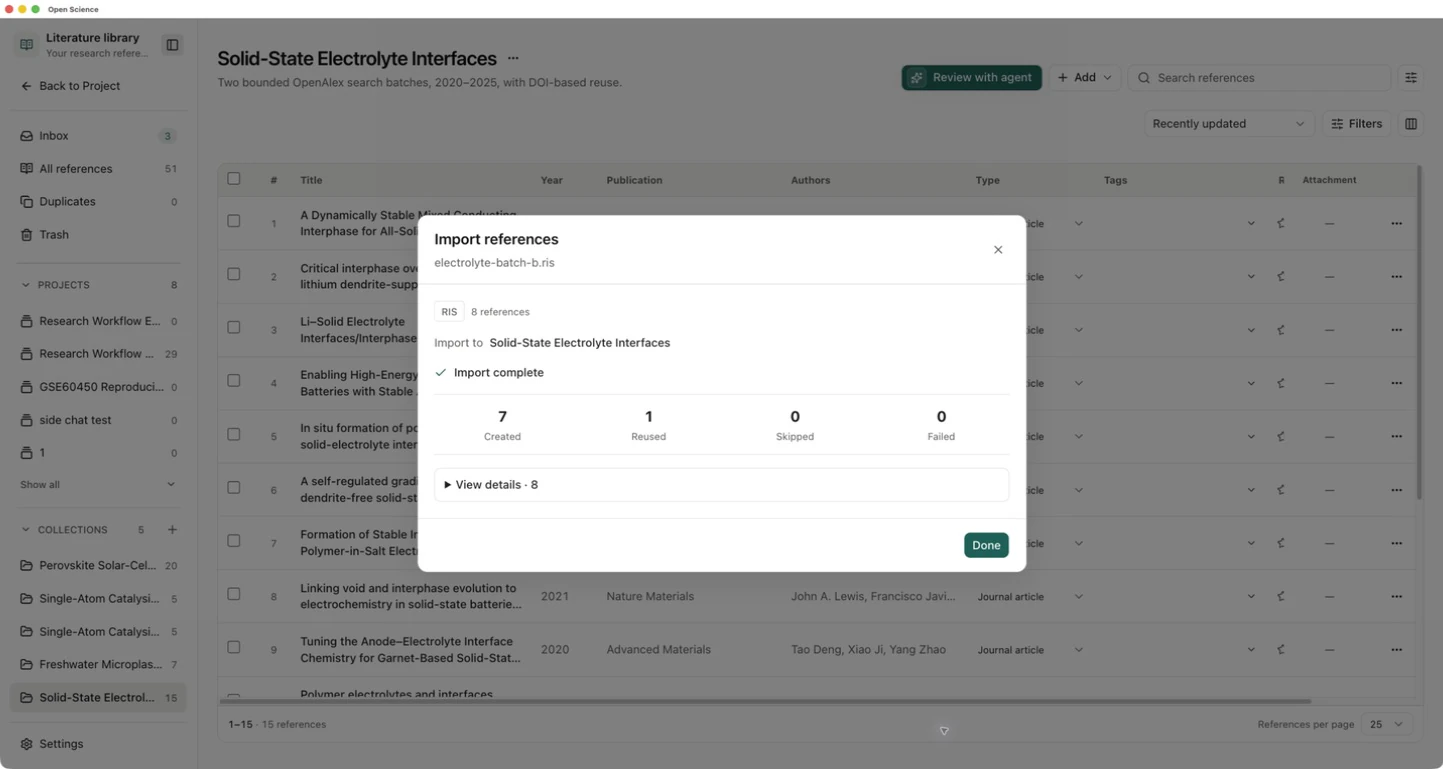
Keep Reuse existing reference, inspect the shared title, then import. Read the actual completion summary: 7 Created, 1 Reused, 0 Skipped, 0 Failed. Reuse keeps existing metadata and adds the matching reference to the destination; it does not create a second copy or download a PDF.
5. Check the resulting collection
Click Done. The collection contains 15 references, agreeing with the DOI union. Keep the two original exports and the provenance CSV so a colleague can reconstruct where each candidate came from.
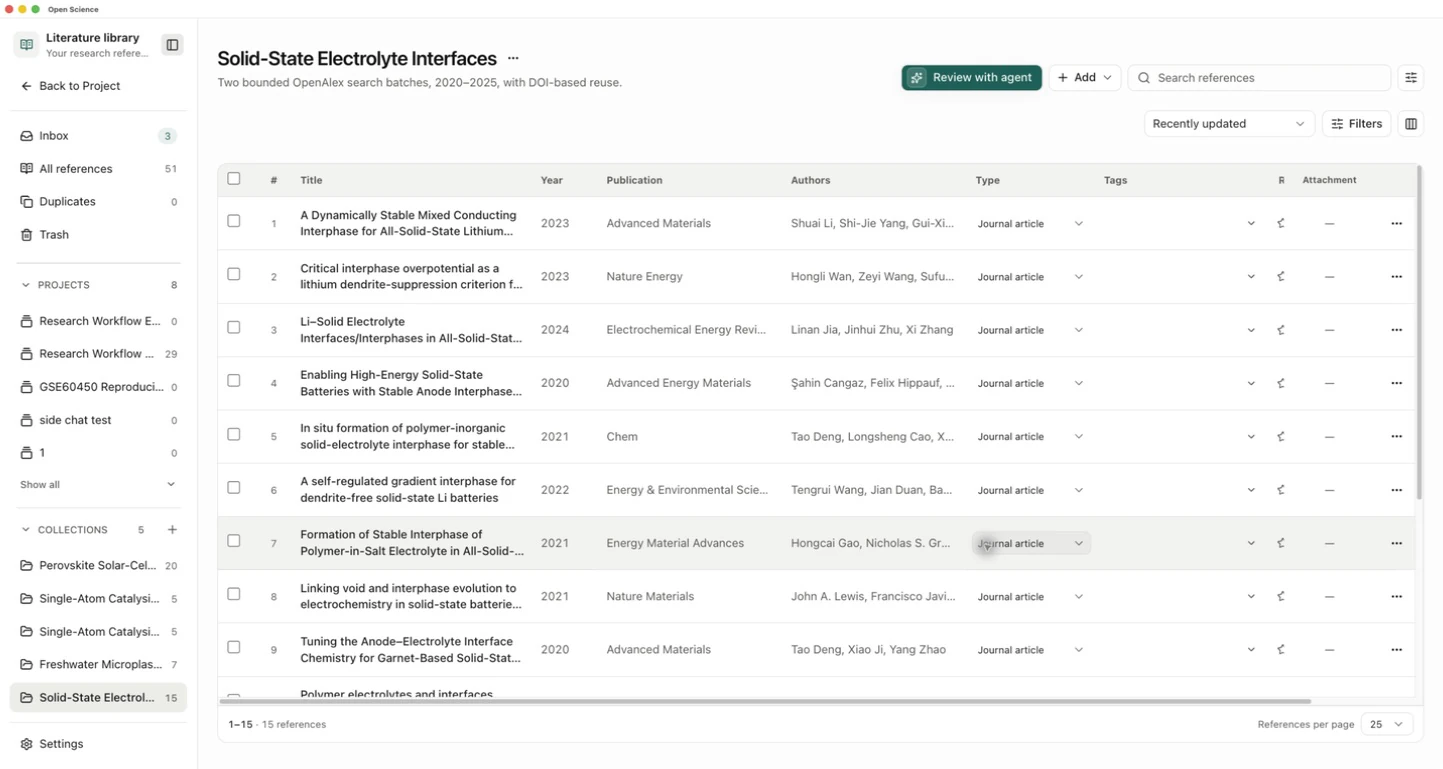
A count match is a useful check, not a replacement for inspecting the overlapping DOI and representative titles. To add a later publication window while preserving the baseline, continue with update an existing literature collection.